The Internet Is Becoming America’s Second Economy
Across the United States, digital communities, gaming ecosystems, creator platforms, and Web3 networks are evolving into a parallel economy where participation itself may become long-term value.

Something unusual is happening across the United States.
The internet is slowly transforming from a communication layer into a parallel economy.
Not a symbolic one.
A real one.
For millions of younger Americans, digital ecosystems are no longer just places to scroll, watch videos, or play games. They are environments where people build income streams, communities, reputations, audiences, friendships, and increasingly, long-term financial positioning.
This shift accelerated after the pandemic, but its roots go much deeper.
For years, the traditional economy operated separately from internet culture. Real careers existed offline. Digital life was considered secondary entertainment.
That separation is disappearing.
Today, entire generations spend significant portions of their lives inside digital environments:
- creator platforms
- gaming ecosystems
- livestream communities
- online marketplaces
- Discord groups
- AI-driven businesses
- Web3 ecosystems
And wherever human attention accumulates consistently, economies eventually form around it.
America is already witnessing this transformation in real time.
A creator in Los Angeles monetizes audience attention directly online. A gamer in Texas earns through competitive digital ecosystems. A designer in New York builds a personal brand entirely through internet-native communities. A small online project built by five developers can suddenly attract global participation faster than traditional startups once could.
The barriers to building internet-native ecosystems are collapsing.
At the same time, younger Americans increasingly question whether traditional systems alone can still provide upward mobility at the speed previous generations experienced. Inflation, rising housing costs, AI disruption, and economic instability are reshaping how younger users think about wealth creation itself.
As a result, many are turning toward ecosystems where participation happens earlier, faster, and more directly.
That does not necessarily mean abandoning traditional investing altogether.
But it does mean the internet economy increasingly competes with it.
This is one reason sectors like Web3 and GameFi continue surviving despite multiple market crashes and speculative cycles. Beneath the volatility, the underlying cultural trend remains intact:
People want digital environments where participation carries value.
Not just consumption.
The first phase of social media rewarded attention.
The next phase may reward ecosystem participation itself.
That idea sits at the center of many emerging Web3 communities today.
Projects like XEO are attempting to position themselves inside this transition by combining competitive gaming infrastructure with lifestyle-driven digital culture and long-term community participation. Built on Ethereum, XEO operates less like a traditional gaming project and more like an attempt to build an internet-native ecosystem where gaming, identity, community, and participation intersect.
The timing may be more important than many realize.
The internet economy is still structurally early.
Most people still associate online ecosystems primarily with entertainment or speculation. But historically, technological infrastructure often looks unserious before becoming foundational. Social media once appeared temporary. Gaming was dismissed for decades as niche entertainment before becoming one of the world’s largest industries.
Web3 may currently be experiencing a similar period.
The speculative hype has cooled significantly since previous cycles. But underneath the surface, smaller ecosystems continue building quietly:
- playable products
- niche communities
- digital cultures
- participation systems
- internet-native brands
That quieter phase is often where long-term positioning begins.
Especially in America, younger users increasingly understand that asymmetric opportunity rarely appears after mainstream consensus fully arrives. By the time institutions dominate a sector, most of the explosive upside has usually already compressed.
This is why many younger internet-native participants no longer look exclusively at massive established companies when thinking about the future.
Instead, they explore smaller emerging ecosystems capable of growing alongside larger cultural shifts already happening online.
Not every ecosystem survives.
Most fail.
But the internet itself increasingly rewards communities capable of sustaining identity, participation, and culture over long periods of time.
And as America’s digital economy continues expanding beyond social media into fully functioning online ecosystems, projects like XEO are attempting to position themselves at the intersection of where internet culture, gaming, lifestyle, and digital ownership may eventually converge.
Learn more: https://xeotoken.com/
Enjoyed this story?
More for you
Keep reading

Behavioral Capitalism: The Economy Built on Human Reactions
We are entering a new economic phase where human reactions, rather than products, are being monetized. In an ecosystem where every data point—from your scroll speed to emotional engagement—is transformed into a financial asset, we examine the fine line between privacy and manipulation.
Read moreBriefs
Latest News
GLOBAL
The Screen Is No Longer Enough: Inside Silicon Valley’s Physical AI Pivot
May 19, 2026· 4 min

GLOBAL
Silicon Valley’s New Cold War: California vs. The White House Over AI Rules
May 19, 2026· 4 min
GLOBAL
Top 5 AI Processor Stocks to Watch in 2026
May 19, 2026· 4 min

WEB3
The Test of Solana’s Brand Loyalty: Culture and Reality in a Bear Market
May 17, 2026· 3 min

WEB3
Why Ethereum’s Path to $12,000 Requires a Descent to $1,350
May 17, 2026· 3 min
GLOBAL
Google’s Ecosystem Shift and Sony’s Supply Chain Dilemma
May 17, 2026· 2 min

WEB3
Why Bitcoin at $49,000 is Formally Logical
May 17, 2026· 3 min
CULTURE
'Quiet Quitting' of the Internet: Why We Are Leaving Big Social Media for Micro-Communities
May 17, 2026· 4 min

CULTURE
Goodbye Austin, Hello Boise: The Top 5 Affordable US Cities for Remote Tech Workers in 2026
May 17, 2026· 4 min

CULTURE
The Industrialized Artifact: Swatch, Mass-Market Collectibility, and Modern PR Mechanics
May 16, 2026· 4 min
From the feed
Latest Articles
WEB3
Monero’s War on ASICs and the Structural Economics of Absolute Privacy
May 20, 2026· 10 min

WEB3
Top 10 Proof-of-Work Networks: Efficiency, Hardware Ecosystems, and Market Realities
May 18, 2026· 9 min

CULTURE
AI-Backed Autonomous Infrastructure and the Re-Indexing of American Agricultural Capital
May 18, 2026· 7 min
WEB3
Building Self-Sustaining Computational Ecosystems in Rural America
May 18, 2026· 11 min
WEB3
Off-Grid Computational Energy: The Math Behind Solar-Powered Mining in Rural America
May 18, 2026· 10 min
GLOBAL
The Computing Supercycle, Block-Mining Infrastructure, and Generative Capital
May 18, 2026· 5 min

CULTURE
Turn Your Time and Skill into Income
May 16, 2026· 2 min
WEB3
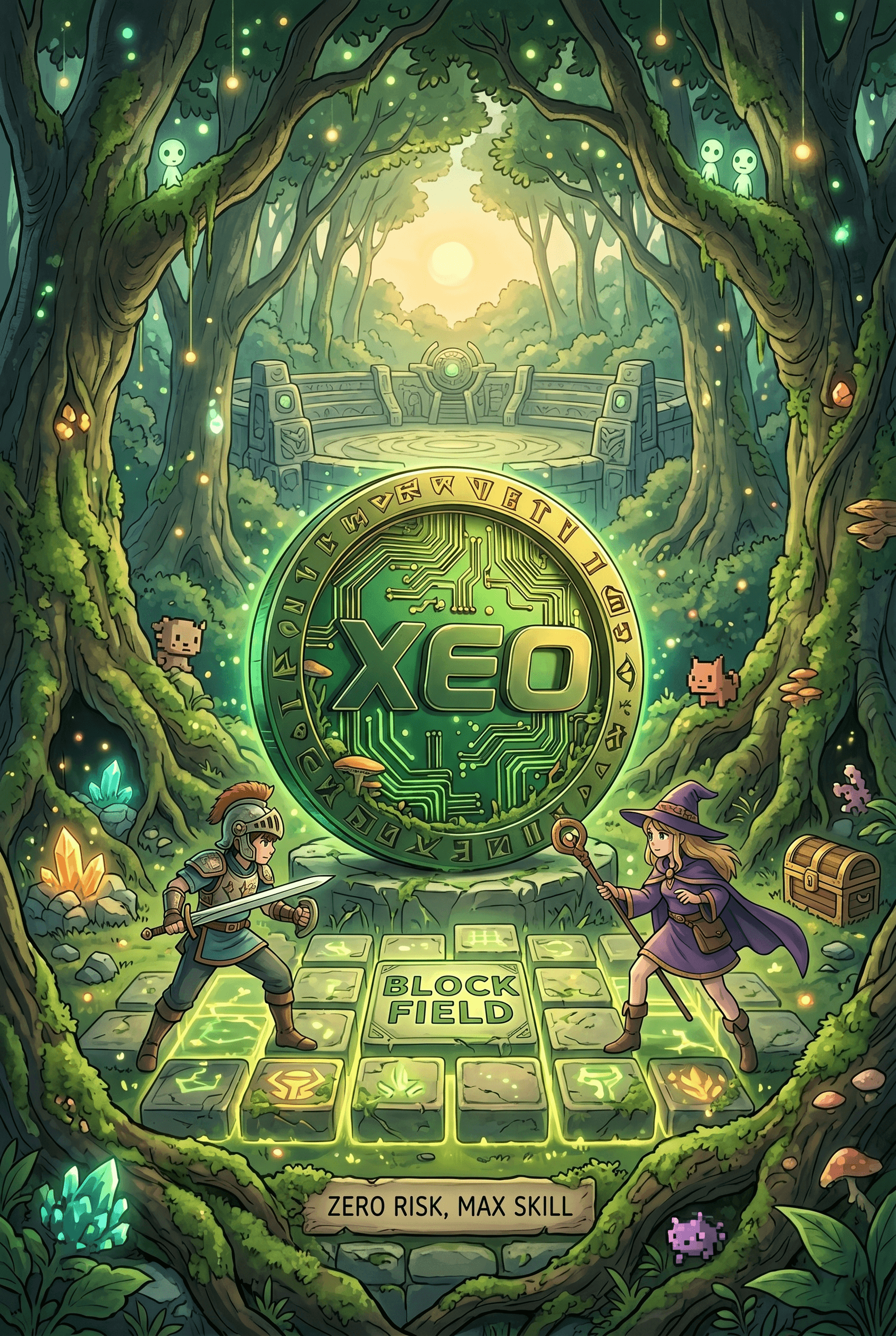
"Zero Risk, Maximum Skill" – XEO Tournaments are Kicking Off in the Asteroix Universe!
May 16, 2026· 1 min
GLOBAL
Institutional Tech Infrastructure Investments: Iowa & Texas Analysis
May 16, 2026· 6 min
CULTURE
Behavioral Capitalism: The Economy Built on Human Reactions
May 15, 2026· 14 min