Do You Really Own Your Digital Games and Items? The Future of Virtual Ownership
Can you copyright AI-generated art? Explore how human creativity, commercial licensing, and copyright laws shape AI art ownership in 2026, with a focus on the United States, Japan, Canada, and Australia. Learn what artists and businesses need to know.
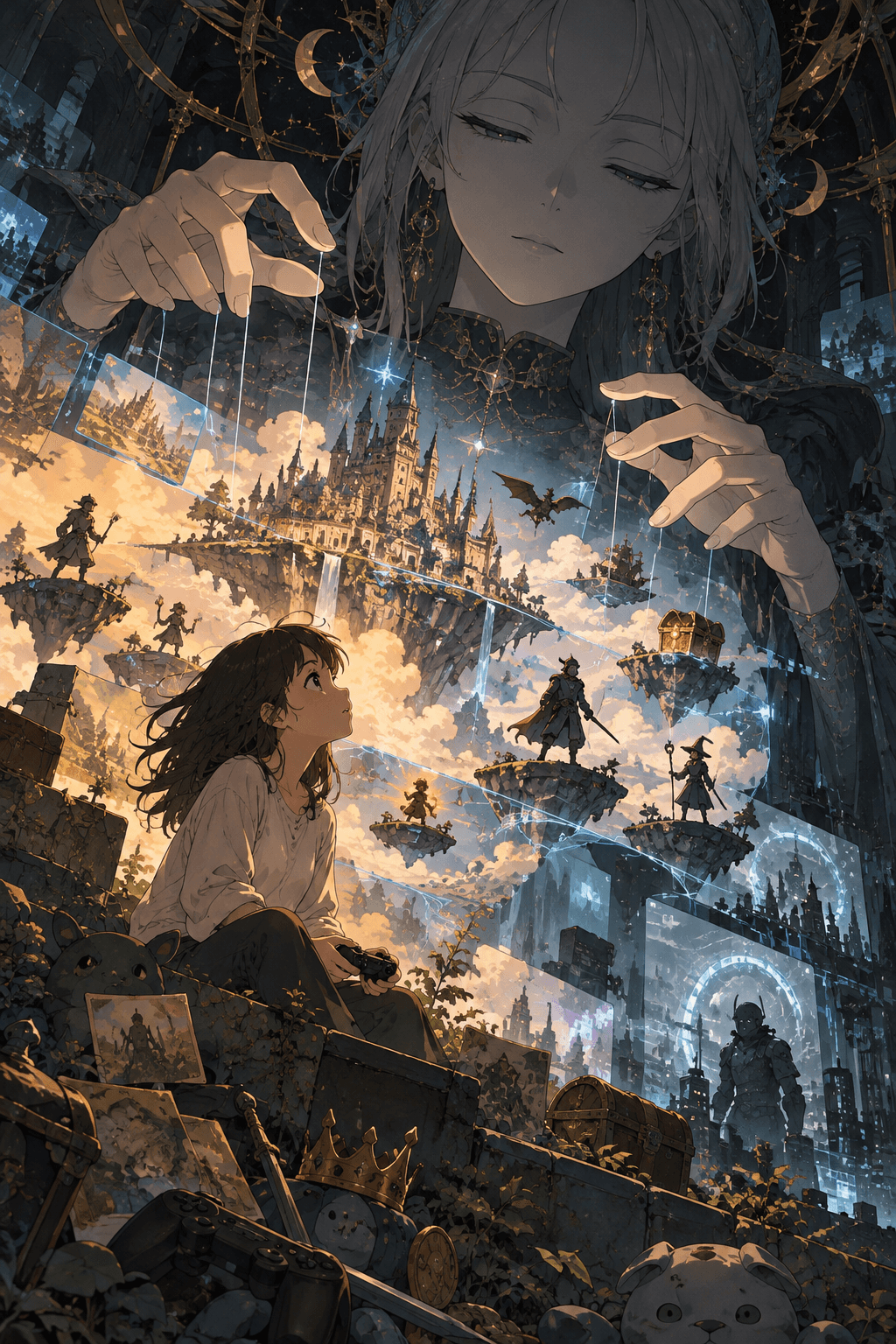
Do You Really Own Your Digital Games and Items? The Future of Virtual Ownership
The gaming industry has built an extraordinary economy around things that cannot be touched. But behind every purchased game, rare skin, virtual vehicle, and digital collectible lies a question that most players rarely ask until something goes wrong: what, exactly, did they buy?
Imagine opening your favorite gaming platform one evening and discovering that a title you purchased years ago is no longer accessible.
You still have the receipt. The transaction appears in your purchase history. Perhaps you spent hundreds of hours playing, unlocked dozens of achievements, and bought additional content along the way.
Yet the game is gone.
There is no broken disc to repair, no cartridge to clean, and no local copy that can necessarily be restored. The problem may have nothing to do with your computer or console. Somewhere else, a server has been disconnected, a license has changed, or an account has lost access.
For generations raised on physical products, this can feel fundamentally wrong. Buying something traditionally meant acquiring an object that remained yours until you sold it, gave it away, or destroyed it.
Digital entertainment operates according to a different logic.
Modern gaming platforms often sell access to software under contractual licenses rather than transferring ownership of the underlying software. Virtual items frequently exist as entries in proprietary databases. Online games can depend on infrastructure controlled entirely by their publishers.
None of this necessarily makes digital distribution dishonest or inherently inferior. Digital platforms offer remarkable convenience, continuous updates, global communities, and experiences that would have been difficult to imagine during the era of physical media.
But convenience has introduced a new relationship between consumers and the things they purchase.
We increasingly pay for digital experiences without possessing the independent ability to preserve, transfer, or continue using them.
The distinction matters far beyond video games. Music libraries, films, digital artwork, online identities, virtual fashion, and emerging blockchain assets all raise variations of the same question.
What does ownership mean when the object exists primarily as software?
The Difference Between Buying a Game and Owning One
A physical video game once offered a relatively straightforward transaction.
You entered a store, paid for a cartridge or disc, and took it home. Depending on the hardware and software, you could often play it without maintaining a relationship with the retailer.
You could lend it to a friend, place it on a shelf for twenty years, or sell it to someone else.
That did not mean you owned the game's intellectual property. Purchasing a copy of a game never gave you the right to reproduce its code commercially or publish your own edition.
You owned a physical copy, subject to the relevant laws, while the developer or publisher retained the underlying intellectual property.
This distinction between a copy and the work itself is essential.
Digital distribution did not invent software licensing. Computer software has long been distributed under contractual terms. What changed was the practical balance of control.
When a game is downloaded through a digital storefront, the customer generally receives a license to use the software under specified conditions.
Steam's Subscriber Agreement states that its content and services are licensed rather than sold, and that the license does not transfer ownership of the content itself.
PlayStation's software terms similarly describe a personal, limited, non-transferable license. They also distinguish software access from ownership of intellectual property.
The important point is not that digital purchasers receive nothing.
They receive contractual rights to use the product. Those rights can be commercially meaningful and may also be protected by consumer law.
But the rights are not necessarily equivalent to owning a transferable physical copy.
A useful way to understand the difference is to separate three concepts:
- Access means being able to use the game under certain conditions.
- Control means having the practical ability to decide how, when, and where the game can be used.
- Ownership is a legal relationship whose precise meaning depends on the asset, applicable law, and the rights transferred.
These concepts overlap, but they are not interchangeable.
A customer may have long-term access without being able to resell the game. Another may possess an installation file but remain subject to licensing restrictions. A third may own a blockchain token without having any legal claim to the artwork associated with it.
In each case, the word own conceals important details.
Why digital storefronts prefer licenses
From the perspective of publishers, licensing offers several advantages.
It helps establish rules against unauthorized copying, commercial redistribution, cheating, and modification. It allows online services to be updated, maintained, and moderated.
For multiplayer games, centralized control can also be essential to security and competitive fairness.
A game with millions of interconnected players cannot function exactly like a standalone cartridge. Its economy, matchmaking systems, user accounts, and anti-cheat protections require continuous coordination.
The difficulty emerges when contractual control extends beyond what consumers reasonably expect from a purchase.
If a customer pays the full retail price for a game, should the publisher be able to make that game permanently inaccessible?
If a player spends money on an item, should the publisher have unlimited discretion to alter or remove it?
If an account is suspended, what happens to years of purchased content?
There are no universally simple answers. Consumer protections vary by jurisdiction, and individual circumstances matter.
Still, these questions expose a widening gap between the language of digital commerce and the practical rights attached to digital products.
The Crew: When a Purchased Game Became Unplayable
Few examples illustrate this problem as clearly as The Crew.
Ubisoft's open-world racing game launched in 2014, allowing players to explore a large representation of the United States through an online-connected experience.
For many players, it was more than a racing game. It was a virtual road trip, a collection of vehicles, and a world filled with memories.
In December 2023, Ubisoft announced that the original game would be removed from digital stores and that its servers would shut down on March 31, 2024.
The company explained that the decision involved server infrastructure and licensing constraints.
Crucially, Ubisoft confirmed that the shutdown would make the game inaccessible across its supported platforms.
The distinction between removing a game from sale and making existing copies unplayable is enormous.
A delisted game may remain accessible to people who previously purchased it. A game whose essential online infrastructure has been shut down may not.
For The Crew, players who had purchased the game could no longer continue playing through the official service after the shutdown.
Their past purchases had not guaranteed permanent functionality.
A purchase receipt is not a preservation strategy
Consider two fictional players.
One purchased a traditional single-player racing game on disc. The other purchased an online-dependent racing game through a digital storefront.
Both paid approximately the same amount.
Ten years later, the first player may still be able to play the game on compatible hardware, provided the necessary software remains functional.
The second player may discover that the servers required for gameplay no longer exist.
The difference is not simply physical versus digital.
A physical game can also depend on servers, mandatory downloads, activation systems, or online authentication. Conversely, a digitally downloaded game can function independently for years.
The decisive question is whether the game can continue operating without permission or assistance from an external service.
That is why game preservation advocates increasingly focus on technical dependencies rather than the packaging in which a game was sold.
A different decision for The Crew 2
The original game's shutdown was not the end of the story.
In October 2025, Ubisoft introduced a hybrid mode for The Crew 2, allowing players to switch between online and offline experiences.
The offline mode preserves core gameplay, although some multiplayer and connected features are unavailable. Ubisoft also documented how players can export progression into an offline save.
This is an important development because it demonstrates that a publisher can design a more durable transition when maintaining a permanent online service is no longer practical.
It does not mean every multiplayer game can be transformed into a fully functional offline product.
Some experiences depend so heavily on other players, shared databases, or live simulation that preserving them requires substantial engineering work.
Nevertheless, The Crew 2 offers a useful example of a compromise: preserve as much of the purchased experience as technically and commercially feasible.
The larger lesson is that a game's lifespan is not determined solely by consumer demand.
It is also determined by decisions made about architecture, maintenance, and end-of-life support.
The Hidden Infrastructure Behind Every Virtual Item
Now consider a different kind of purchase.
A player buys a rare weapon skin, a limited-edition costume, or a virtual vehicle.
The item may have no physical counterpart, yet it can carry significant personal value.
Perhaps it commemorates a tournament victory. Perhaps it was available only during a particular season. Perhaps it represents hundreds of hours of effort.
Its value may come from scarcity, aesthetics, identity, social recognition, or practical usefulness within the game.
But what is the item technically?
In many conventional online games, it is a record associated with a player account.
The game's database might identify an item type, an inventory owner, a creation date, a cosmetic variation, and other attributes.
The client software then interprets that information and displays the corresponding object.
The virtual sword does not exist as an independent physical thing. It exists as a relationship between data, software, infrastructure, and rules.
Remove one essential component and the object may lose its usefulness.
A cosmetic skin is valuable partly because the game knows how to display it. A virtual vehicle matters because the game provides roads, physics, and activities in which it can be driven.
This introduces a crucial principle of digital economics:
Owning a record of an object is not necessarily the same as controlling the environment that gives the object value.
Scarcity can be real without being physical
Digital objects can be scarce.
A publisher may issue only a limited number of collectibles. A game economy may restrict the creation of certain items. A tournament reward may be associated with a particular achievement.
The fact that an object is digital does not make its scarcity meaningless.
But scarcity is only as credible as the system enforcing it.
In a centralized game, the publisher may retain the ability to create additional items, change their attributes, alter their rarity, or discontinue the economy.
Some publishers commit to predictable issuance rules. Others reserve broad discretion to change their products.
Consumers should distinguish between scarcity enforced by an auditable technical mechanism and scarcity maintained through a company's policy.
Both can support functioning markets.
Neither automatically guarantees lasting financial value.
Emotional value and market value are different
A player may treasure a virtual item that has almost no resale value.
Another item may command a high price in a marketplace while carrying little personal meaning for its owner.
These forms of value should not be confused.
Digital economies often combine three different motivations: enjoyment, status, and speculation.
Enjoyment comes from using an item.
Status comes from what possessing it communicates to other players.
Speculation comes from the expectation that someone else may pay more for it later.
Problems arise when companies encourage players to treat speculative assets as reliable investments, or when consumers assume a rare item must appreciate because its supply is limited.
Scarcity alone does not create demand.
A limited digital object associated with an abandoned game may become less valuable precisely because the community that gave it meaning has disappeared.
Why You Usually Cannot Sell Your Digital Games Like Physical Copies
For much of gaming history, secondhand markets played an important role in affordability and discovery.
Players could purchase used games at lower prices, trade unwanted titles, or recover part of their spending by reselling a collection.
Digital storefronts generally operate differently.
A purchased game is often associated with an account, and the platform's terms may restrict transferring the license to another person.
This has practical consequences.
A digital library containing hundreds of games can represent thousands of dollars in spending without functioning as a freely transferable collection of assets.
The customer may have substantial access rights but limited resale options.
That does not necessarily mean every contractual restriction is enforceable in every country. Legal treatment of software licensing and resale differs across jurisdictions, and consumer rights can override certain contractual provisions.
But in everyday use, digital storefronts do not typically provide a simple equivalent of selling a used disc.
What about Steam Families?
Steam Families allows eligible household members to access games from participating family libraries.
The system offers a useful way to share certain purchases, while maintaining restrictions on eligible games and simultaneous access.
Steam's documentation also distinguishes family sharing from permanent transfer of ownership.
Sharing a license under platform rules is not the same as selling it.
This distinction matters because digital platforms can create valuable consumer-friendly features without granting unrestricted ownership.
A family-sharing system can improve affordability and convenience while remaining entirely dependent on the platform's infrastructure and policies.
The paradox of a valuable account
A longtime player's account may contain purchased games, rare cosmetics, saved progress, achievements, and a recognizable online identity.
The combined personal value can be enormous.
Yet the player may be unable to transfer those assets independently.
Selling the account itself may violate platform terms, introduce security risks, or expose the buyer to losing access.
The result is a strange economic arrangement: an account can accumulate substantial value without becoming conventional property that the user can freely sell.
This is not unique to gaming.
Social media accounts, digital subscriptions, online memberships, and creator profiles face similar questions.
The internet has made it easy to accumulate digital value and surprisingly difficult to define who controls it.
Can a Digital Game Ever Be Truly Yours?
One of the most important distinctions in game preservation is the difference between an online-dependent product and a game that can operate independently.
A downloadable game with no mandatory authentication requirement can often remain playable even if the original storefront closes.
That does not automatically transfer copyright ownership to the purchaser.
It does, however, provide stronger practical control.
A user who possesses a functioning offline installer may be able to reinstall the game on compatible hardware without requesting permission from a remote server.
This is why DRM-free distribution occupies a distinctive position in the ownership debate.
What DRM-free actually means
Digital rights management, or DRM, refers to technical systems designed to control access to copyrighted content.
These systems can include activation checks, account verification, encryption, and other mechanisms.
DRM-free software removes certain technical restrictions, allowing the software to operate without those specific controls.
GOG, a digital PC game storefront, has built its distribution model around DRM-free games and downloadable offline installers.
Its developer documentation explains that supported games should work without requiring GOG Galaxy authentication or an internet connection for their offline functionality.
This creates an important practical advantage.
If a customer downloads and preserves the necessary installation files, they may retain the ability to install and play the game independently of the storefront.
There are still limitations.
Hardware compatibility can change. Operating systems evolve. Some features may depend on external services. Copyright restrictions continue to apply.
But DRM-free distribution reduces one major form of dependence.
It shifts a degree of control from the platform to the consumer.
Preservation is not the same as piracy
Discussions about game preservation often become entangled with copyright infringement.
The two issues should be considered separately.
Preserving a legitimately acquired game can serve historical, cultural, educational, and personal interests.
That does not mean every method of copying, distributing, or bypassing technical protections is automatically lawful.
Copyright exceptions and anti-circumvention rules vary by country and circumstance.
A responsible preservation framework must account for the rights of creators and publishers alongside the public interest in preserving interactive works.
The objective should not be to eliminate copyright.
It should be to prevent culturally significant digital experiences from disappearing unnecessarily.
Games are increasingly important cultural artifacts. Their worlds, music, visual design, and social systems reflect the periods in which they were created.
If preservation depends entirely on the continuing commercial interest of a publisher, large portions of gaming history may become inaccessible.
Enter Blockchain: A Different Model of Digital Ownership
Blockchain technology introduced an alternative way to record and transfer certain digital assets.
Instead of relying exclusively on a private database maintained by a game publisher, a blockchain-based asset can be represented by a token recorded on a shared network.
For example, the Ethereum ERC-721 standard provides a mechanism for identifying and transferring unique non-fungible tokens.
Its standard defines how token ownership and transfers can be tracked through compatible smart contracts.
The central innovation is not that blockchain makes digital images or game items physically real.
It is that the record of ownership can exist outside a single game's proprietary account database.
Depending on the design, a token holder may be able to transfer an asset between compatible wallets without requesting approval from the original game's publisher.
That can create a meaningful form of technical portability.
But it also introduces an important distinction.
A blockchain can establish which wallet controls a token. It does not automatically establish that the wallet owner has legal copyright in an associated artwork, or that a particular game must continue recognizing the token.
Those are separate questions.
What an NFT actually contains
A non-fungible token generally represents a unique identifier managed by a smart contract.
Its metadata may describe an associated image, game object, collectible, or other digital asset.
The metadata can point to information stored elsewhere.
Under ERC-721, metadata support is optional, and token metadata may include a URI identifying external information. The standard also allows metadata implementations in which referenced information can change.
This means that purchasing an NFT does not necessarily mean purchasing a permanently stored image.
Nor does it guarantee that the referenced content will remain available forever.
A token may continue existing while an external image server becomes unavailable.
A game item may remain in a wallet while the game that once displayed it shuts down.
The ownership record and the associated experience can have different lifespans.
This is one of the most important limitations of blockchain-based gaming.
Decentralizing an ownership record does not automatically decentralize the entire game.
The Difference Between Token Ownership and Copyright
Suppose an artist creates a digital illustration and issues an NFT associated with it.
A collector purchases the token.
What does the collector own?
At minimum, assuming a valid transaction and functioning contract, the collector controls the token according to the smart contract's rules.
But that does not automatically mean the collector owns the copyright in the illustration.
Copyright can include rights to reproduce, distribute, adapt, and commercially exploit a creative work.
Those rights may remain with the artist or another rights holder unless they are expressly transferred or licensed under applicable law.
This distinction has become important enough that blockchain developers have proposed standards intended to clarify licensing relationships.
Ethereum's ERC-5218 proposal, for example, addresses the problem of connecting NFTs to associated legal rights and licensing information.
The broader issue is that technical ownership and legal ownership operate in different systems.
A smart contract can record a transfer between wallets.
It cannot, by itself, resolve every copyright dispute, determine whether the original creator had permission to mint the asset, or guarantee that courts will recognize a particular claim.
Legal rights still depend on applicable law, contractual language, and the circumstances of the transaction.
Why this matters for gaming
Imagine buying an NFT representing a rare sword.
You may control the token, but several questions remain unanswered.
Does the purchase allow you to use the sword in one game or several?
Can you sell the token to another player?
Can the developer change the sword's damage statistics?
Can you reproduce the sword's artwork on merchandise?
Will the item remain functional if the game closes?
These are different rights.
A well-designed blockchain game should explain them separately rather than treating the word ownership as an all-purpose promise.
Players deserve to know exactly what their purchase provides.
Can You Transfer an NFT Item Between Different Games?
Interoperability has long been one of the most attractive ideas associated with blockchain gaming.
Imagine earning a rare sword in one game and carrying it into another.
Or purchasing a digital outfit that could be worn by avatars across multiple virtual worlds.
In theory, a shared ownership standard can make it easier for independent applications to recognize the same token.
But recognition is only the beginning.
A sword created for a medieval fantasy game may have no obvious role in a realistic racing simulator.
A detailed three-dimensional character model may not fit another game's animation system, visual style, or performance requirements.
Different games use different physics, balancing systems, rendering pipelines, and artistic conventions.
Even when two games recognize the same token, they may need entirely separate implementations of the associated object.
A token can provide a shared identifier.
It cannot automatically create compatible gameplay.
The real interoperability problem
True interoperability requires cooperation at several levels.
Developers need common technical standards, or translation layers between different systems.
They must agree on what an asset represents and how it should behave.
They also need to address intellectual property, security, moderation, and economic balance.
A rare item in one game might be deliberately powerful. Importing that power into another game could undermine its competitive design.
Similarly, allowing unrestricted external assets into a carefully curated virtual world could create copyright problems or expose players to inappropriate content.
Interoperability is therefore not merely a blockchain engineering challenge.
It is a product-design and governance challenge.
The most realistic early applications may involve portable identity, collectible recognition, access credentials, or cosmetic representations rather than unrestricted transfer of functional equipment.
For example, an item earned in one game could unlock a commemorative badge or cosmetic reward in another participating game.
That would not require the two games to share identical combat systems.
It would still provide a meaningful connection between digital experiences.
The value would come from cooperation between developers, supported by shared verification infrastructure.
Centralized Games Versus Blockchain Games: Who Controls What?
The distinction between conventional and blockchain-based gaming is often presented as a simple choice between corporate control and player freedom.
Reality is more complicated.
Centralized games can offer substantial player freedoms. Blockchain games can retain extensive developer control.
The relevant question is how authority is distributed across different parts of the experience.
Dimension | Conventional online game | Blockchain-based game |
|---|---|---|
Asset record | Usually proprietary database | May use a public blockchain |
Transfers | Subject to platform rules | May allow wallet-to-wallet transfers |
Game functionality | Depends on game infrastructure | Often still depends on game infrastructure |
Copyright | Defined by law and licenses | Also defined by law and licenses |
Item attributes | Developer-controlled | Depends on architecture and governance |
Server shutdown | Can remove functionality | Can still remove functionality |
Account recovery | Often platform-assisted | Depends on custody and wallet design |
Fraud protection | Platform moderation and support | Depends on protocol and services |
Neither model guarantees better outcomes in every category.
Centralized systems can reverse fraudulent transactions, restore compromised accounts, and enforce consumer protections through established support processes.
Blockchain systems can make asset records publicly verifiable and may reduce dependence on a single database operator.
But blockchain transactions can also be difficult or impossible to reverse, depending on the network and circumstances.
A player who loses access to a self-custodied wallet may lose control of assets permanently.
A player using a custodial wallet may remain dependent on the company operating that wallet.
Decentralization changes the distribution of risks.
It does not eliminate them.
The importance of developer accountability
An open blockchain does not prevent developers from making poor decisions.
A game can issue freely transferable tokens while retaining centralized control over gameplay, servers, item usefulness, and community access.
The token might survive the game.
Its practical value might not.
Conversely, a traditional game can adopt consumer-friendly policies such as offline access, transparent item rules, and long-term preservation commitments without using blockchain at all.
This suggests a more productive standard for evaluating digital ownership.
Rather than asking whether a game uses NFTs, ask what rights and protections the player actually receives.
Can assets be transferred?
Can the game be played without permanent connectivity?
Are item rules transparent?
What happens when the service ends?
Can the user recover from account loss?
Are the associated legal rights clearly explained?
These questions reveal far more about the quality of a digital ownership model than its underlying marketing vocabulary.
The Economics of Virtual Ownership
The market for digital goods has changed how people think about value.
A virtual item can be valuable because it is useful, beautiful, rare, recognizable, or connected to a community.
Unlike a physical object, it may have negligible marginal reproduction cost.
That does not mean it has no economic value.
A song can be copied digitally, yet the rights associated with it remain economically significant.
A digital design can be duplicated, yet customers may pay for authorized access, personalization, or commercial usage.
Gaming economies operate through similar combinations of utility, permission, scarcity, and social meaning.
Why players spend money on things they cannot touch
Consider a player purchasing a cosmetic outfit.
The outfit may not improve performance.
Its value may come from identity.
People have always used objects to express taste, status, belonging, and personality.
Clothing, jewelry, sports merchandise, and collectible objects perform similar social functions in the physical world.
Digital environments simply create another setting in which these behaviors emerge.
An avatar can become a meaningful extension of personal identity, particularly in communities where people spend substantial time together.
A rare cosmetic can communicate participation in a particular event or era of a game.
A tournament reward can symbolize achievement.
These motivations do not require financial speculation.
They are ordinary cultural behaviors expressed through software.
Why resale changes the equation
When an item can be transferred or resold, additional economic considerations emerge.
The purchaser may begin evaluating liquidity, market demand, transaction costs, and potential resale value.
That can make an item feel more like an asset.
But the ability to resell something does not guarantee that anyone will want to buy it.
Virtual markets can be highly sensitive to changes in popularity, game balance, platform policy, and speculative enthusiasm.
An item associated with a growing community may attract strong demand.
The same item may become difficult to sell if players leave.
Blockchain can make transfers technically possible.
It cannot manufacture lasting demand.
The problem with investment-driven game design
A game built primarily around the expectation of financial returns may face a fundamental conflict.
Players want enjoyable experiences.
Investors want assets to appreciate.
Developers need sustainable revenue.
These goals do not always align.
If new participants are expected to purchase assets primarily because earlier participants hope to sell at higher prices, the economy may become fragile.
A healthy virtual economy should create value through entertainment, utility, creativity, or genuine community participation.
Financial mechanisms should support those activities rather than replace them.
The strongest argument for digital ownership is not that every game item should become an investment.
It is that players should have clearer rights over things they acquire and create.
What Happens to Your Digital Assets When a Game Dies?
This is the question every digital economy eventually confronts.
No online service can reasonably promise infinite operation.
Companies close. Technologies become obsolete. Licensing agreements expire. Audiences move on.
The challenge is deciding what obligations remain when a commercial service reaches the end of its life.
For a conventional game, closure may mean losing access to servers, inventories, progression, and community features.
For a blockchain game, the tokens may remain accessible on the network even after the game's servers close.
But what does that persistence accomplish?
It depends on the asset.
A token representing a standalone collectible may retain historical or cultural significance.
A token granting access to a discontinued game mode may lose most of its utility.
An asset supported by multiple independent applications may continue functioning elsewhere.
A token whose metadata points to unavailable files may become difficult to interpret.
The blockchain record alone does not determine the outcome.
Designing for the end from the beginning
Developers can reduce these risks through deliberate architectural choices.
Where practical, games can support offline functionality or local saves.
They can provide advance notice of shutdowns and clear explanations of what will happen to purchases.
They can design export mechanisms for user-generated content.
They can document how inventories and progression are stored.
For blockchain assets, they can explain which components are decentralized and which depend on proprietary services.
They can also establish realistic policies for metadata preservation, smart-contract administration, and long-term access.
Not every feature can be preserved indefinitely.
But users should not have to discover the limitations of their purchases only after a shutdown has been announced.
A transparent end-of-life policy is part of responsible digital product design.
Consumer Rights Are Beginning to Catch Up
The legal framework surrounding digital purchases is evolving.
For years, consumers became accustomed to purchasing digital goods through interfaces that resembled conventional retail transactions.
A storefront displayed a price. The user clicked a purchase button. The product appeared in a library.
The legal relationship behind that transaction could be considerably more complex.
Regulators and lawmakers have increasingly examined whether consumers receive sufficient information about the nature of digital licenses.
The underlying challenge is one of clarity.
If a transaction grants a revocable or conditional license rather than ownership of a transferable copy, should that distinction be made more prominent before purchase?
What protections should apply when digital content fails to function as advertised?
What remedies should consumers have when a service changes or ends?
These questions are especially important across the United States, Canada, Australia, Japan, and Europe, where different legal systems approach digital contracts, consumer protection, and copyright in different ways.
It would be misleading to describe these jurisdictions as having one unified concept of digital ownership.
It would also be misleading to assume that a platform's terms automatically eliminate statutory consumer protections.
A contract is only one part of the legal framework.
Why clearer language matters
Imagine two purchase screens.
The first says:
Buy now.
The second says:
Purchase a personal license to access this game, subject to online-service availability and the applicable terms.
The second is less elegant from a marketing perspective.
But it gives the customer more information about the nature of the transaction.
The objective should not be to turn every storefront into a legal document.
It should be to make material limitations understandable before money changes hands.
Consumers should be able to distinguish between permanent offline access, subscription access, online-dependent licenses, and transferable digital assets.
The technology already supports many different business models.
The language of digital commerce should reflect those differences.
How to Protect Your Digital Game Library
There is no universal method for guaranteeing permanent access to every digital purchase.
However, consumers can make more informed choices by understanding the risks attached to different products.
Prefer offline functionality when long-term access matters
If a game is primarily a single-player experience, check whether it can run without permanent internet connectivity.
A game with a fully functional offline mode is generally less dependent on continuing server support.
That does not guarantee compatibility with future hardware, but it reduces one major point of failure.
Understand the difference between DRM-free and unrestricted ownership
DRM-free software may provide greater practical control over installation and use.
It does not necessarily allow unlimited redistribution, commercial copying, or resale.
Technical freedom and legal permission are separate concepts.
Preserve legitimate backups where permitted
For games distributed with offline installers, maintaining copies of installation files can improve long-term accessibility.
Users should follow applicable laws and license terms when making or using backups.
It is also sensible to preserve purchase records, product keys where applicable, and information about required software dependencies.
Treat online-only purchases differently
Before spending substantial money on an online-only game or its virtual economy, consider the product's dependence on ongoing service.
A purchase may provide years of enjoyment.
But it should not automatically be treated as a permanent asset.
This is particularly relevant for expensive cosmetics, virtual currencies, and limited-time items.
Evaluate NFT rights individually
Before purchasing a blockchain gaming asset, investigate what the token actually represents.
Check whether the asset can be transferred, whether its metadata is durable, and what legal rights accompany it.
Determine whether the game recognizes the asset through an independent standard or a proprietary service.
Most importantly, understand what happens if the game ceases operation.
The word NFT is not a substitute for examining the underlying rights.
The Future of Digital Ownership May Be Hybrid
The debate over digital ownership is often framed as a competition between traditional gaming companies and decentralized technology.
That framing overlooks a more interesting possibility.
The future may combine elements of both.
A game could maintain centralized servers for performance, security, and competitive integrity while allowing certain collectibles to be held in transferable wallets.
Another could operate entirely through a conventional storefront while providing permanent offline access and clear preservation guarantees.
A third could use blockchain only for tournament credentials, collectible history, or community membership, without placing its entire game economy on-chain.
These are different architectural decisions designed to solve different problems.
The most successful approach will depend on the needs of the game and its audience.
A fast-paced competitive shooter has different technical requirements from a digital collectible gallery.
A single-player narrative game has different preservation needs from a persistent multiplayer world.
There is no reason to assume one ownership model should apply universally.
From ownership as a slogan to ownership as a product feature
The next generation of digital platforms may compete on how much control they give users.
Some consumers will prioritize convenience and customer support.
Others will value transferability, offline access, open standards, or independent custody.
Many will want a combination.
A useful digital ownership system should make these trade-offs visible.
It should also avoid demanding that users become experts in software licensing, blockchain security, or copyright law simply to understand what they purchased.
Better ownership models are not necessarily the most technically complicated.
They are the ones whose promises match their actual capabilities.
Frequently Asked Questions
Do you legally own games purchased on Steam?
Steam generally provides licenses to access and use games rather than transferring ownership of the underlying software. The precise rights depend on Steam's terms, the relevant game, and applicable consumer law.
Can a publisher remove a game I already bought?
A publisher may discontinue online services or remove a game from sale, but the consequences for existing purchasers depend on the product, contractual terms, technical design, and applicable consumer protections. Delisting does not always mean existing customers lose access.
Do you own skins purchased in video games?
Usually, a skin is a licensed virtual item governed by the game's terms. Some games allow trading or resale, while others prohibit it. The purchaser does not ordinarily acquire the underlying artwork's copyright simply by buying the skin.
Does owning an NFT mean owning the artwork?
Not automatically. Token ownership and copyright ownership are different. Any commercial or reproduction rights must be determined from the applicable legal terms and licensing arrangements.
Can blockchain prevent games from shutting down?
No. Blockchain may preserve ownership records or transferable tokens, but games can still depend on centralized servers, developers, software updates, and proprietary infrastructure.
Are DRM-free games better for long-term ownership?
They often provide greater practical independence because offline play may not require continued storefront authentication. However, DRM-free distribution does not eliminate copyright restrictions or guarantee compatibility with future systems.
Can digital items become real assets?
Digital items can have economic value and, in some systems, transferable rights. Whether they qualify as particular forms of property under law depends on the jurisdiction and circumstances. Market value and legal ownership should not be assumed to be the same thing.
Conclusion: We Need a Better Definition of Ownership
Digital entertainment has transformed the meaning of possession.
A game library can contain hundreds of titles without containing a single physical object.
A virtual wardrobe can cost more than a real one.
A rare digital collectible can carry cultural meaning, social prestige, and financial value.
None of these developments is inherently irrational.
People value experiences, identities, communities, and creative works—not merely the materials from which objects are made.
The real problem is not that digital goods lack physical form.
It is that the rights attached to them are often difficult to understand.
A player may believe a purchase represents permanent possession when it actually provides conditional access.
A collector may believe an NFT grants intellectual property rights when it only establishes control of a token.
A consumer may assume a game can be preserved indefinitely when its entire functionality depends on a server that could eventually disappear.
The solution is not to reject digital distribution or embrace blockchain uncritically.
It is to demand greater precision.
Ownership should describe meaningful rights: the ability to access, preserve, transfer, control, or use an asset under clearly understood conditions.
Different products may offer different combinations of those rights.
That is acceptable, provided consumers understand what they are receiving.
The gaming industry's next major innovation may not be a new graphics engine, a larger virtual world, or another speculative digital marketplace.
It may be something less glamorous but more enduring: a clearer agreement between creators, platforms, and the people who pay to inhabit their worlds.
Because in a digital economy, the most important question is no longer simply what we can buy.
It is what remains ours when the platform is gone.
Editorial Sources
- Steam Subscriber Agreement — Software licensing and access terms.
- PlayStation Software Terms — Software licenses, virtual items, and online-service conditions.
- Ubisoft: The Crew 2 Hybrid Mode — Offline preservation approach.
- GOG Developer Documentation — DRM-free distribution.
- Ethereum ERC-721 — NFT ownership and token standards.
- Ethereum ERC-5218 — Rights management and licensing distinctions.
Enjoyed this story?
More for you
Keep reading
The Shift Toward Abandoned Mining Shafts for Sovereign Data Center Architecture
As surface-level power grids face unprecedented strain from AI workloads, data center operators are moving underground. Abandoned mining shafts offer natural thermal management and structural security, transforming heavy industry relics into sovereign digital infrastructure.
Read moreFrom the feed
Latest Articles
CULTURE
What Happens to Your Digital Identity After You Die?
Oct 13, 2026· 25 min
GLOBAL
How Much Electricity Does AI Use? The Hidden Cost of Data Centers
Oct 13, 2026· 26 min
GLOBAL
Why Japan Is at the Center of the Virtual Influencer Economy
Oct 13, 2026· 20 min
WEB3
The Quiet Genesis: Why XEO is Refusing the Hype Cycle to Build a Sovereign Living Ecosystem
Aug 23, 2026· 2 min
CULTURE
The Bio-Digital Commons: Why Synthetic Biology Requires Decentralized Infrastructure
Jul 24, 2026· 6 min
CULTURE
The Shift Toward Abandoned Mining Shafts for Sovereign Data Center Architecture
Jun 30, 2026· 6 min
CULTURE
Premium Minimalist Hardware and the High-Stakes Economy of Digital Detargeting
Jun 24, 2026· 13 min
CULTURE
Licensing the Mind: The Economics of Generative Agents as High-Yield Digital Assets
Jun 23, 2026· 10 min
WEB3
The Sovereignty Deficit: Why Stablecoin Regulations in Emerging Markets are Forcing Capital Offshore
Jun 18, 2026· 4 min
WEB3
The Missing Piece in GameFi And How XEO Plans to Redefine Ownership, Utility, and Competitive Play
May 27, 2026· 3 min
Briefs
Latest News
WEB3
XEO Ecosystem Releases Official Track "3.5 Billion Years" Produced by QuixTilt Records
Oct 1, 2026· 1 min
GLOBAL
Inside HSBC and the Bank of England’s Digital Securities Sandbox
Jul 25, 2026· 6 min
GLOBAL
Why S&P 500 Software is Lagging While AI Hardware Dominates 2026
Jul 25, 2026· 7 min
GLOBAL
Why Wall Street is Re-Valuing SpaceX as an AI Infrastructure Giant
Jul 25, 2026· 8 min
WEB3
S&P and Pantera’s Index Launch and the End of Speculative Token Valuation
Jul 22, 2026· 7 min
GLOBAL
The Algorithmic Border: How Kinetic Supply Chains are Reindexing South China Sea Logistics
Jul 10, 2026· 3 min
WEB3
A Vision Coming to Life: XEO Takes Strategic Steps to Shape the "Living Ecosystem" of the Future
Jul 8, 2026· 2 min
GLOBAL
The Screen Is No Longer Enough: Inside Silicon Valley’s Physical AI Pivot
May 19, 2026· 4 min
GLOBAL
Silicon Valley’s New Cold War: California vs. The White House Over AI Rules
May 19, 2026· 4 min
GLOBAL
Top 5 AI Processor Stocks to Watch in 2026
May 19, 2026· 4 min