The Missing Piece in GameFi And How XEO Plans to Redefine Ownership, Utility, and Competitive Play
GameFi promised a new era — games where players truly own their assets, where rewards reflect contribution, and where blockchain creates transparency instead of artificial scarcity.
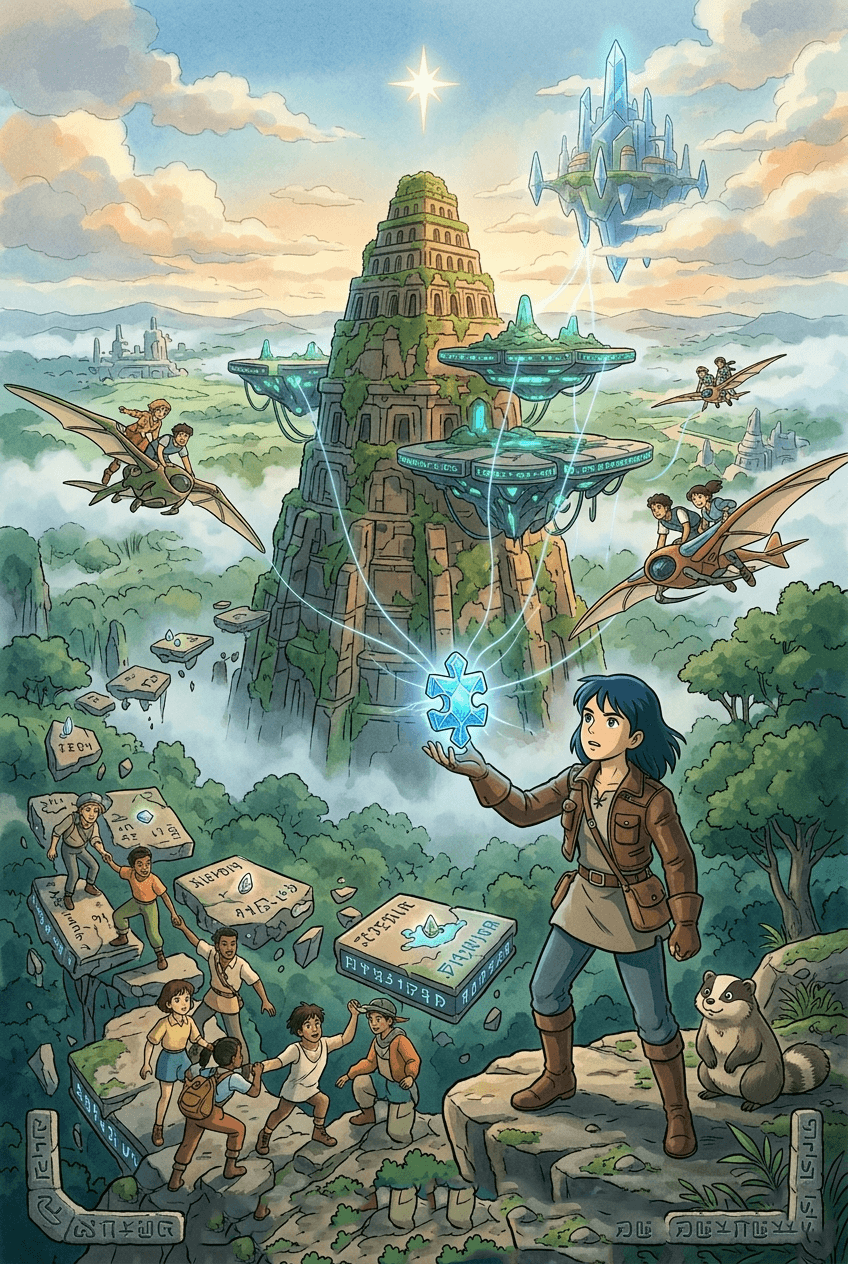
Yet years after its rise, the space still struggles with fundamental flaws.
Many current GameFi titles look innovative on the surface, but underneath, they rely on:
-unsustainable reward systems
-weak PvP mechanics
-low replayability
-purely cosmetic NFTs
-unstable economies
-extraction-focused design rather than player-focused design
The result?
Projects fade quickly, tokens collapse, and players feel disconnected from the worlds they enter.
At XEO, through our flagship ecosystem XEO, we’re approaching GameFi from a completely different angle — one that prioritizes gameplay, ownership, and long-term value above short-term hype.
1. The Core Problem: GameFi Forgot to Be “Game” First
Most GameFi launches focus on tokenomics rather than gameplay.
Players are treated as temporary liquidity, not participants.
NFTs act as entry tickets, not functional tools.
This leads to:
-shallow gameplay loops
-repetitive tasks
-economies driven by emissions, not engagement
-PvP systems with no depth
-fast burnout
Web3 games should offer real strategy, real progression, and real competition — not glorified staking dashboards with animated interfaces.
XEO starts by addressing the most important foundation:
Make the game fun and competitive — then connect it to the blockchain.
2. XEO’s Approach: PvP at the Center of the Ecosystem
At the heart of XEO lies a fast-paced, skill-based PvP game.
A format that rewards:
-decision-making
-timing
-strategy
-adaptation
-mastery
Not “who spent more,” but who plays better.
Our PvP system is designed so that blockchain serves the gameplay — not the other way around.
3. NFTs as Real Functionality, Not Decorative Collectibles
In XEO, NFTs are not static images or passive badges.
They are functional components that influence competitive gameplay.
Each NFT integrates directly with the PvP system:
-3-Level Evolution System → every NFT can be upgraded
-Skill Combinations → PvP abilities + NFT bonuses
-Long-term Utility → progression unlocks new advantages
-Ownership Advantages → holding NFTs affects performance, not only cosmetics
Your strategic choices and your NFT ownership work together.
This creates endless combinations — and true digital ownership that actually matters.
These NFTs are built with technology that allows them to unlock unique long-term rewards, giving holders real benefits across seasons, updates, and future expansions.
4. A Sustainable Economy: Where Spending Goes Back to Players
One of the biggest failures in GameFi is one-way economies, where players spend but rarely benefit.
XEO introduces a different model:
A large portion of in-game spending flows back to the game economy.
This means:
-rewards funded by real participation
-players supporting each other through activity
-a circular economic loop
-sustainability instead of inflation
-contribution-based distribution instead of emissions
The more the ecosystem grows,
the more value returns to the community.
This is not a promise: it’s a system.
5. Ownership, Identity, and Progression Combined
XEO’s economic and gameplay layers merge into a single experience:
PvP performance
NFT ownership
Level progression
Together they form your identity in the XEO Universe.
You’re not just owning an asset
you’re building a long-term profile that evolves, competes, and grows.
This combination creates a unique foundation for:
-seasons
-tournaments
-long-term leaderboards
-exclusive rewarded events
-achievement-based unlocks
In short:
Your journey becomes your value.
6. Rethinking Social Tasks and Community Engagement
We do not believe in empty social media tasks.
Retweet farming, artificial hype, and meaningless quests do not build real communities.
Instead, XEO focuses on:
-rewarding readers who engage with our articles
-encouraging honest feedback (positive or negative)
-listening to community insights and concerns
-improving the ecosystem based on dialogue, not noise
We want a community that thinks, not just clicks.
Our mission is to build a structure where:
the people who contribute the most receive the most.
This includes both:
-a points-based reward system
-future collaborations for those who help shape our direction
Community is not a marketing tool for us —
it is the core of our design philosophy.
7. Conclusion: GameFi Doesn’t Need More Tokens ,It Needs More Depth
XEO is not here to repeat the mistakes of the past.
We are building:
-gameplay that stands on its own
-NFTs that evolve with you
-a sustainable economic cycle
-real competition
-real ownership
-real long-term value
-a community that grows with intention, not hype
The next generation of GameFi won’t be defined by inflationary tokens or empty promises but by ecosystems where players matter, ownership matters, and skill matters.
That is what XEO stands for.
This is the future we’re building.
XEO hasn’t been released yet. (By the time you read this, our token may have already been released. Please check out our official pages.)
Join our journey by following us.
XEO Token
Enjoyed this story?
More for you
Keep reading
Why Ethereum Still Attracts Serious Builders in America’s Web3 Scene
Despite newer chains and faster hype cycles, many serious Web3 builders in America continue choosing Ethereum for one reason: long-term trust and infrastructure stability still matter.
Read moreFrom the feed
Latest Articles
WEB3
The Quiet Genesis: Why XEO is Refusing the Hype Cycle to Build a Sovereign Living Ecosystem
Aug 23, 2026· 2 min

CULTURE
The Bio-Digital Commons: Why Synthetic Biology Requires Decentralized Infrastructure
Jul 24, 2026· 6 min
CULTURE
The Shift Toward Abandoned Mining Shafts for Sovereign Data Center Architecture
Jun 30, 2026· 6 min

CULTURE
Premium Minimalist Hardware and the High-Stakes Economy of Digital Detargeting
Jun 24, 2026· 13 min

CULTURE
Licensing the Mind: The Economics of Generative Agents as High-Yield Digital Assets
Jun 23, 2026· 10 min

WEB3
The Sovereignty Deficit: Why Stablecoin Regulations in Emerging Markets are Forcing Capital Offshore
Jun 18, 2026· 4 min

CULTURE
Cognitive Sanctuary: E-Ink Monitors and the Aristocracy of Attention in the Age of Information Overload
May 22, 2026· 5 min
WEB3
Monero’s War on ASICs and the Structural Economics of Absolute Privacy
May 20, 2026· 10 min

WEB3
Top 10 Proof-of-Work Networks: Efficiency, Hardware Ecosystems, and Market Realities
May 18, 2026· 9 min
CULTURE
AI-Backed Autonomous Infrastructure and the Re-Indexing of American Agricultural Capital
May 18, 2026· 7 min
Briefs
Latest News
WEB3
XEO Ecosystem Releases Official Track "3.5 Billion Years" Produced by QuixTilt Records
Oct 1, 2026· 1 min

GLOBAL
Inside HSBC and the Bank of England’s Digital Securities Sandbox
Jul 25, 2026· 6 min
GLOBAL
Why S&P 500 Software is Lagging While AI Hardware Dominates 2026
Jul 25, 2026· 7 min

GLOBAL
Why Wall Street is Re-Valuing SpaceX as an AI Infrastructure Giant
Jul 25, 2026· 8 min
WEB3
S&P and Pantera’s Index Launch and the End of Speculative Token Valuation
Jul 22, 2026· 7 min

GLOBAL
The Algorithmic Border: How Kinetic Supply Chains are Reindexing South China Sea Logistics
Jul 10, 2026· 3 min
WEB3
A Vision Coming to Life: XEO Takes Strategic Steps to Shape the "Living Ecosystem" of the Future
Jul 8, 2026· 2 min
GLOBAL
The Screen Is No Longer Enough: Inside Silicon Valley’s Physical AI Pivot
May 19, 2026· 4 min
GLOBAL
Silicon Valley’s New Cold War: California vs. The White House Over AI Rules
May 19, 2026· 4 min
GLOBAL
Top 5 AI Processor Stocks to Watch in 2026
May 19, 2026· 4 min