The 21st Century’s New Silk Road
The Silk Road has gone digital. Power is no longer defined by land—but by data, infrastructure, and control over digital corridors.

There was a time when power moved along roads.
The routes carved by caravans didn’t just carry goods; they carried ideas, culture, and influence. Empires didn’t rise simply because of what they owned, but because they controlled how things moved. The Silk Road wasn’t just a trade network—it was a map of power.
Today, that map seems to have disappeared.
But in reality, it has only become invisible.
We no longer see the roads. There are no caravans, no borders, no waiting. We send something, and it arrives instantly. Money, data, messages—they all move at the same speed.
This creates the illusion of a frictionless system.
But speed doesn’t eliminate fragility. It just hides it.
In the past, when a caravan was attacked, everyone knew. Today, when a system is compromised, most people don’t notice—until it’s too late. Swords have been replaced by exploits. Ambushes by backdoors. The tools have changed, but the logic hasn’t.
If you can interrupt the flow, you can control the system.
The idea that the digital world is abstract is also misleading. Because at its core, this system is still physical.
Beneath the oceans, cables stretch across continents, carrying the vast majority of global internet traffic. These are not just technical components—they are structural dependencies. When one is disrupted, it doesn’t just affect communication. It affects trade.
Above us, satellites move silently, extending this network into the sky. Data flows not only across land and sea, but through the atmosphere itself.
They just don’t look like roads anymore.
There are also new kinds of stops along the way.
In the past, caravans relied on places where goods could be stored, protected, and exchanged. Today, those places have been replaced by wallets and protocols. Value moves through them. People depend on them.
But there is a difference.
In the past, loss could be recovered. Today, losing access often means losing everything. The system doesn’t pause. It doesn’t forgive.
Once you’re out, you’re out.
The idea of full control starts to feel more complicated here.
Holding your own assets, using your own systems—it sounds empowering. But who defines the rules of those systems? Who can change them? Under what conditions?
These questions are usually buried in technical details.
But they matter more than anything else.
“Code is law” became a defining phrase of the digital era.
But code doesn’t write itself.
If a system can be updated, overridden, or accessed through hidden permissions, then control isn’t absolute. It exists within boundaries.
And anything that exists within boundaries can be taken away.
The world is reorganizing itself around these invisible routes.
Some regions are building tightly controlled, integrated systems. Others are focusing on openness, standards, and slower but more distributed growth. Each approach has its strengths—and its trade-offs.
But the most interesting position may belong to those who choose neither.
Countries that remain flexible. That connect systems instead of committing to one. That move between structures rather than inside them.
In a fragmented world, the ability to connect may be more valuable than dominance.
It used to be easy to see the routes.
Now it isn’t.
But they’re still there—quieter, faster, and harder to notice.
And one thing hasn’t changed:
Whoever controls the flow, shapes the outcome.
Enjoyed this story?
More for you
Keep reading

The Bio-Digital Commons: Why Synthetic Biology Requires Decentralized Infrastructure
As synthetic biology transitions from academic laboratories to industrial scales, legacy patent monopolies and centralized bio-foundry bottlenecks are constraining global development.
Read moreFrom the feed
Latest Articles
WEB3
The Quiet Genesis: Why XEO is Refusing the Hype Cycle to Build a Sovereign Living Ecosystem
Aug 23, 2026· 2 min
CULTURE
The Bio-Digital Commons: Why Synthetic Biology Requires Decentralized Infrastructure
Jul 24, 2026· 6 min

CULTURE
The Shift Toward Abandoned Mining Shafts for Sovereign Data Center Architecture
Jun 30, 2026· 6 min

CULTURE
Premium Minimalist Hardware and the High-Stakes Economy of Digital Detargeting
Jun 24, 2026· 13 min

CULTURE
Licensing the Mind: The Economics of Generative Agents as High-Yield Digital Assets
Jun 23, 2026· 10 min

WEB3
The Sovereignty Deficit: Why Stablecoin Regulations in Emerging Markets are Forcing Capital Offshore
Jun 18, 2026· 4 min

WEB3
The Missing Piece in GameFi And How XEO Plans to Redefine Ownership, Utility, and Competitive Play
May 27, 2026· 3 min

CULTURE
Cognitive Sanctuary: E-Ink Monitors and the Aristocracy of Attention in the Age of Information Overload
May 22, 2026· 5 min
WEB3
Monero’s War on ASICs and the Structural Economics of Absolute Privacy
May 20, 2026· 10 min

WEB3
Top 10 Proof-of-Work Networks: Efficiency, Hardware Ecosystems, and Market Realities
May 18, 2026· 9 min
Briefs
Latest News
WEB3
XEO Ecosystem Releases Official Track "3.5 Billion Years" Produced by QuixTilt Records
Oct 1, 2026· 1 min

GLOBAL
Inside HSBC and the Bank of England’s Digital Securities Sandbox
Jul 25, 2026· 6 min
GLOBAL
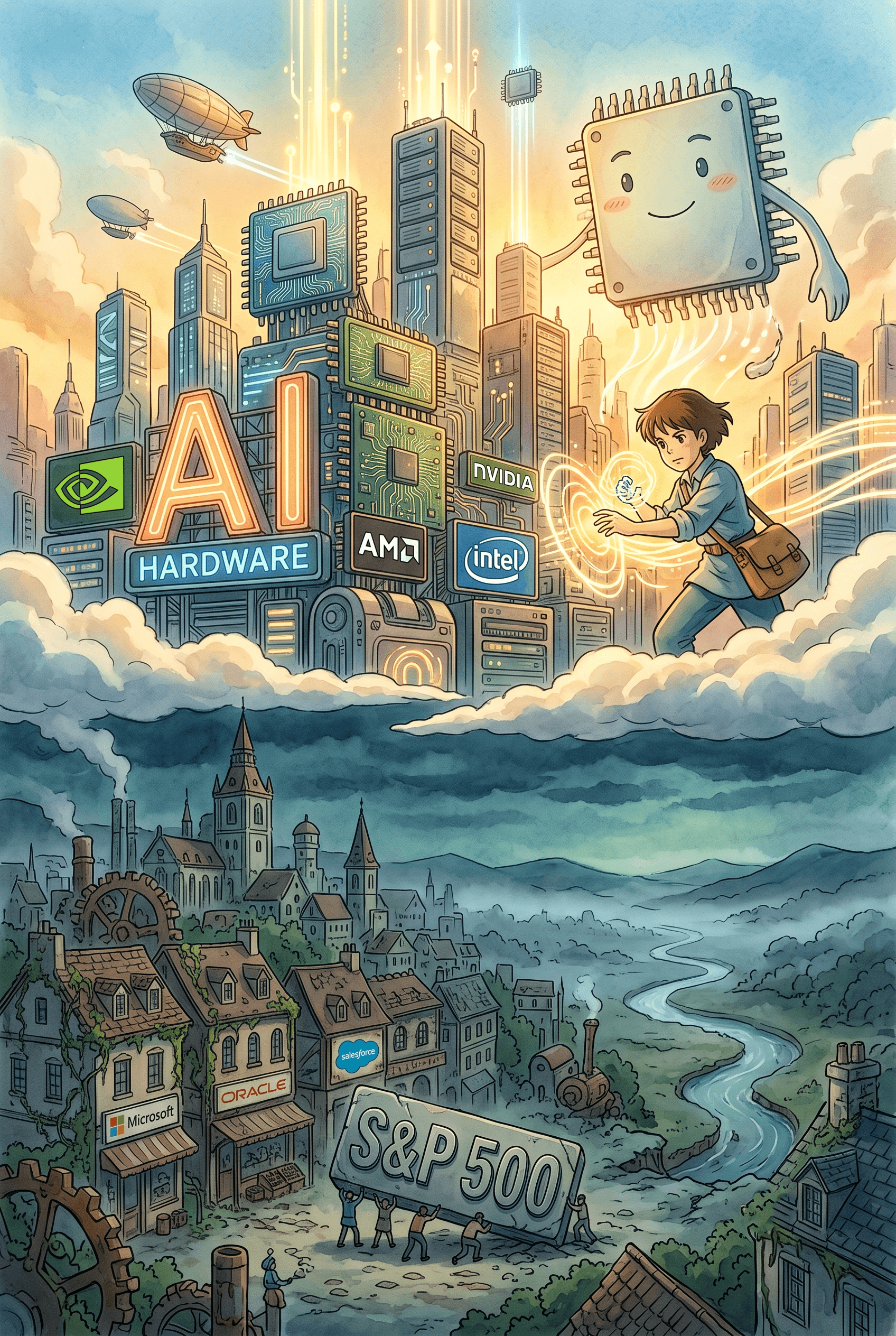
Why S&P 500 Software is Lagging While AI Hardware Dominates 2026
Jul 25, 2026· 7 min
GLOBAL
Why Wall Street is Re-Valuing SpaceX as an AI Infrastructure Giant
Jul 25, 2026· 8 min
WEB3
S&P and Pantera’s Index Launch and the End of Speculative Token Valuation
Jul 22, 2026· 7 min

GLOBAL
The Algorithmic Border: How Kinetic Supply Chains are Reindexing South China Sea Logistics
Jul 10, 2026· 3 min

WEB3
A Vision Coming to Life: XEO Takes Strategic Steps to Shape the "Living Ecosystem" of the Future
Jul 8, 2026· 2 min
GLOBAL
The Screen Is No Longer Enough: Inside Silicon Valley’s Physical AI Pivot
May 19, 2026· 4 min

GLOBAL
Silicon Valley’s New Cold War: California vs. The White House Over AI Rules
May 19, 2026· 4 min
GLOBAL
Top 5 AI Processor Stocks to Watch in 2026
May 19, 2026· 4 min