The $1.75 Trillion Escape Velocity: SpaceX and the 2026 IPO Paradigm
As the mid-2026 IPO window approaches, the reported $1.75 trillion valuation for SpaceX represents the final "escape velocity" for high-tech infrastructure. This analysis examines the xAI merger, the $15 billion Starship gamble, and how the June 2026 Nasdaq listing redefines sovereign compute.

The Weight of the Ledger: The End of Private Dominance
For over two decades, SpaceX has operated as a "black box" of innovation, shielded from the quarterly scrutiny of public markets while it systematically dismantled the global launch monopoly. However, as of May 12, 2026, the narrative has shifted from internal expansion to a monumental public recalibration. Following the reported confidential draft registration statement submitted to the SEC on April 1, 2026, the financial world is bracing for what is poised to be the largest initial public offering in the history of capital markets.
The era of "shotgun stimulus" that characterized the early 2020s has been replaced by a surgical focus on high-tech infrastructure. In this landscape, SpaceX is no longer just a rocket company; it is the primary architect of a multi-planetary balance sheet. With a target valuation of $1.75 trillion—shattering the previous record set by Saudi Aramco—the company is moving toward a June 2026 Nasdaq listing that represents the ultimate "Proof of Reality" for the space economy.
1. The Revenue Engine: Starlink’s $20 Billion Ceiling
While launch services still control roughly 82% of the global commercial market, they are no longer the primary driver of SpaceX’s valuation. In 2026, the financial weight of the company has shifted decisively toward Starlink.
- Subscriber Dominance: By April 2026, Starlink’s subscriber base surged to 17 million, up from just 5 million in late 2024.
- Revenue Projections: Total revenue for 2026 is expected to land between $22 billion and $30 billion, with Starlink contributing approximately 70–80% of that total.
- Margin Structure: Starlink has emerged as a financial powerhouse, with adjusted EBITDA expected to climb to nearly $11 billion in 2026, maintaining margins in the 60%–70% range.
This decoupling from the traditional "boom-bust" cycles of the aerospace industry mirrors the shift seen in semiconductor giants like Micron. Investors are now making a hard distinction between companies with tangible cash flow and those still chasing distant profitability. For SpaceX, the $8.1 billion in projected pro forma free cash flow for 2026 is the metric that justifies its $1.75 trillion price tag.
2. The Infrastructure Gamble: The $15 Billion Starship Debt
The "Proof of Reality" in 2026 is etched in silicon and steel. Reuters recently revealed that SpaceX has spent over $15 billion developing its next-generation Starship rocket system. This sum dwarfs the $400 million spent on the Falcon 9 and represents a massive bet on "airline-like" rocketry.
- The V3 Constellation: Starship is central to the launch of Starlink V3 satellites, scheduled for the second half of 2026.
- Operational Efficiency: The goal is full and rapid reusability at scale, a technological bottleneck that SpaceX is attempting to solve to maintain its high-margin lead over rivals.
- Capital Raise: The IPO is expected to raise between $50 billion and $75 billion, capital that will be immediately funneled back into the Starship infrastructure and the build-out of "Moonbase Alpha".
3. The xAI Merger: Sovereign Compute and Orbital Data Centers
In a strategic move that blurred the lines between aerospace and artificial intelligence, SpaceX announced the acquisition of xAI in February 2026. Valued at approximately $230 billion prior to the merger, xAI provides the software "brain" for SpaceX's hardware "body".
- Orbital Data Centers: The merger opens a new frontier: AI data centers in space. By leveraging Starlink’s global connectivity, SpaceX aims to provide decentralized, sovereign compute that is immune to terrestrial geopolitical instability.
- Internal Circulation: Much like China’s strategy to fund domestic semiconductors, this vertical integration allows SpaceX to manage its own "internal circulation" of data and energy, reducing reliance on third-party AI infrastructure.
4. Macro Implications: The Geopolitical Variable
The 2026 IPO is not happening in a vacuum. As the U.S. and EU ramp up trade protectionism and navigate a "gray zone" of post-pandemic debt, SpaceX has become a matter of national security.
- Sovereign Security: Much like Micron represents a pillar of sovereign compute, SpaceX represents sovereign access to space and global communications.
- Liquidity Injections: For retail investors, the July 10, 2026, IRS refund deadline represents a small but notable injection of liquidity. This "found capital" often finds its way into high-growth, high-volatility names during periods of market optimism.
- Global Cooling: Amidst a cooling global economy and rising headline inflation (which climbed to 3.89% in May 2026), institutional investors are retreating from speculative growth and seeking refuge in infrastructure-heavy entities with "Proof of Reality".
And... Why?
The era of passive expectation is over. For SpaceX, the 2026 deadline is about proving that the space economy is a structural shift, not a bubble. The June 2026 IPO represents the final "escape hatch"—a race to reach a trillion-dollar valuation before the window of subsidized liquidity permanently closes.
Investors must move from a "growth at all costs" mindset to one of topical authority and entity trust. In 2026, the winners are not those with the loudest promises, but those whose "Proof of Reality" is stored in hydrogen cells and launched on Starship. Whether the market can sustain a 95x trailing revenue multiple remains the ultimate test of industrial survival.
Enjoyed this story?
More for you
Keep reading

The Great Recalibration: Navigating China’s Sovereign Debt Paradigm in 2026
As China’s government debt-to-GDP ratio climbs toward 75% in 2026, Beijing is abandoning the old "growth at all costs" infrastructure model in favor of a surgical, high-tech fiscal strategy designed to stabilize a cooling economy.
Read moreBriefs
Latest News

WEB3
XEO Ecosystem Releases Official Track "3.5 Billion Years" Produced by QuixTilt Records
Oct 1, 2026· 1 min

GLOBAL
Inside HSBC and the Bank of England’s Digital Securities Sandbox
Jul 25, 2026· 6 min

GLOBAL
Why S&P 500 Software is Lagging While AI Hardware Dominates 2026
Jul 25, 2026· 7 min

GLOBAL
Why Wall Street is Re-Valuing SpaceX as an AI Infrastructure Giant
Jul 25, 2026· 8 min
WEB3
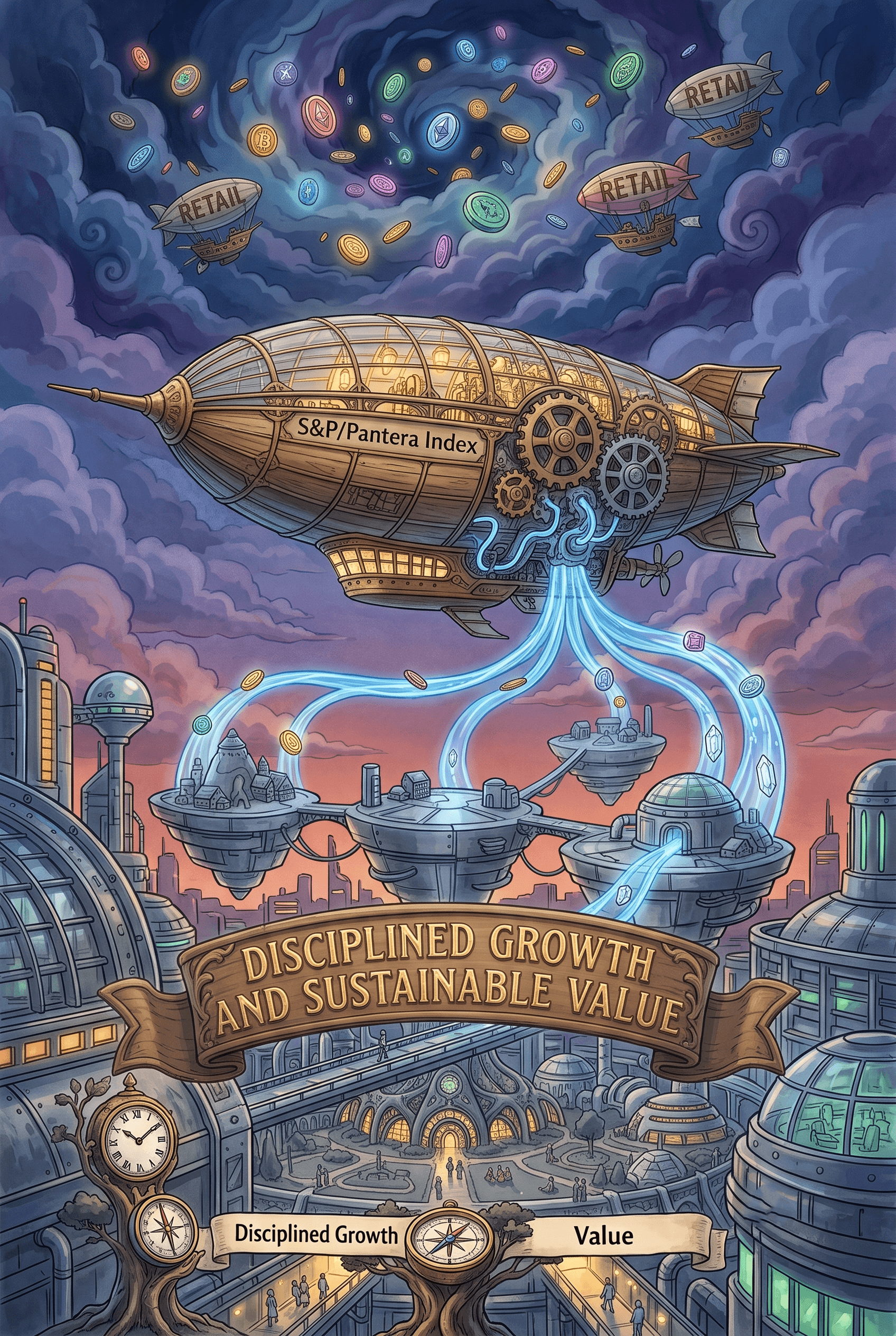
S&P and Pantera’s Index Launch and the End of Speculative Token Valuation
Jul 22, 2026· 7 min

GLOBAL
The Algorithmic Border: How Kinetic Supply Chains are Reindexing South China Sea Logistics
Jul 10, 2026· 3 min

WEB3
A Vision Coming to Life: XEO Takes Strategic Steps to Shape the "Living Ecosystem" of the Future
Jul 8, 2026· 2 min

GLOBAL
The Screen Is No Longer Enough: Inside Silicon Valley’s Physical AI Pivot
May 19, 2026· 4 min

GLOBAL
Silicon Valley’s New Cold War: California vs. The White House Over AI Rules
May 19, 2026· 4 min

GLOBAL
Top 5 AI Processor Stocks to Watch in 2026
May 19, 2026· 4 min
From the feed
Latest Articles

WEB3
The Quiet Genesis: Why XEO is Refusing the Hype Cycle to Build a Sovereign Living Ecosystem
Aug 23, 2026· 2 min

CULTURE
The Bio-Digital Commons: Why Synthetic Biology Requires Decentralized Infrastructure
Jul 24, 2026· 6 min

CULTURE
The Shift Toward Abandoned Mining Shafts for Sovereign Data Center Architecture
Jun 30, 2026· 6 min

CULTURE
Premium Minimalist Hardware and the High-Stakes Economy of Digital Detargeting
Jun 24, 2026· 13 min

CULTURE
Licensing the Mind: The Economics of Generative Agents as High-Yield Digital Assets
Jun 23, 2026· 10 min

WEB3
The Sovereignty Deficit: Why Stablecoin Regulations in Emerging Markets are Forcing Capital Offshore
Jun 18, 2026· 4 min

WEB3
The Missing Piece in GameFi And How XEO Plans to Redefine Ownership, Utility, and Competitive Play
May 27, 2026· 3 min

CULTURE
Cognitive Sanctuary: E-Ink Monitors and the Aristocracy of Attention in the Age of Information Overload
May 22, 2026· 5 min

WEB3
Monero’s War on ASICs and the Structural Economics of Absolute Privacy
May 20, 2026· 10 min

WEB3
Top 10 Proof-of-Work Networks: Efficiency, Hardware Ecosystems, and Market Realities
May 18, 2026· 9 min