The Rise of AI Side Hustles: Real Ways People Are Making Money Today
AI is enabling individuals to build small, scalable income systems without traditional employment. Here are real models that are working today.

Across the internet, a new layer of income is emerging—built not on jobs, but on small, automated systems powered by AI.
There’s a growing disconnect in how people think about income.
On one side, traditional employment still dominates the narrative—jobs, salaries, promotions, long-term career paths. On the other, a quieter shift is happening beneath the surface.
Individuals are building income streams that don’t look like jobs at all.
They look like systems.
This isn’t about overnight success or “get rich quick” schemes.
In fact, most of these systems are small, often generating modest but consistent income. What makes them significant is not the scale—it’s the structure.
They operate with minimal ongoing effort.
They are built once, optimized over time, and then left to run.
“AI didn’t invent side hustles. It made them scalable.”
The core idea is simple.
Take a repetitive digital task.
Automate it using AI.
Connect it to a monetization channel.
That’s it.
What used to require teams, time, and technical expertise can now be assembled by individuals using accessible tools. Platforms powered by companies like OpenAI, combined with infrastructure from Google and Amazon, have lowered the barrier to entry significantly.
But the real shift is not in the tools.
It’s in the mindset.
People are no longer asking, “What job can I get?”
They’re asking, “What can I build that works without me?”
One of the most common models is content-based income.
AI-generated blogs, niche websites, and newsletters are being created at scale. These platforms are monetized through ads, affiliate links, or subscriptions. The content itself is often produced or assisted by AI, while the human operator focuses on selecting topics, structuring the site, and optimizing distribution.
A single niche site might generate a few hundred dollars per month.
Multiple sites can compound that.
Another growing category is automated video content.
Short-form videos, long-form YouTube channels, and even faceless media brands are being built using AI-generated scripts, voiceovers, and editing tools. Once the pipeline is established, content can be produced consistently without direct involvement in every step.
Monetization comes from ad revenue, sponsorships, and platform incentives.
“Content is no longer limited by production. It’s limited by distribution.”
E-commerce has also evolved.
Instead of managing inventory or handling logistics manually, individuals are creating AI-assisted product listings, optimizing pricing strategies, and automating customer communication. In some cases, entire storefronts operate with minimal human interaction, relying on predefined workflows and AI-generated responses.
The model isn’t entirely passive—but it’s significantly more efficient than traditional retail.
Lead generation is another area seeing rapid growth.
Individuals build simple websites targeting specific services—local businesses, niche markets, specialized industries—and use AI to generate content, manage inquiries, and filter leads. These leads are then sold to businesses or converted into service revenue.
It’s not new.
But AI has made it easier to execute.
There are also smaller, more experimental models.
AI-generated digital products—ebooks, templates, design assets—are being created and sold through online marketplaces. Some succeed, many don’t, but the cost of experimentation is low enough that individuals can test multiple ideas quickly.
Failure is no longer expensive.
This changes behavior.
When the cost of building something approaches zero, people build more.
And when more people build, patterns begin to emerge.
“Most AI side hustles don’t fail because the idea is bad. They fail because they never reach distribution.”
Distribution remains the bottleneck.
Search engines, social platforms, and marketplaces determine visibility. Without traffic, even the most efficient system produces nothing.
This is why successful operators focus less on tools and more on channels.
Where will the traffic come from?
How will the system be discovered?
What makes it stand out?
AI can generate content.
It cannot guarantee attention.
There is also a misconception around “passive income.”
Most of these systems are not passive in the beginning. They require setup, testing, and iteration. The passive aspect emerges over time, as processes stabilize and automation takes over repetitive tasks.
This distinction matters.
Because it separates realistic expectations from unrealistic ones.
“Passive income is not built instantly. It becomes passive after it works.”
Another important factor is scale.
A single system generating a small amount of income is useful.
Multiple systems generating small amounts can become significant.
This is where AI provides leverage.
Instead of focusing on one large project, individuals can operate several smaller ones simultaneously.
But this model is not without challenges.
Competition is increasing.
As more people gain access to the same tools, differentiation becomes harder. Generic content, low-quality products, and unoptimized systems are quickly filtered out.
The bar is rising.
At the same time, platforms are adapting.
Search engines are refining how they evaluate AI-generated content. Social platforms are adjusting algorithms to prioritize engagement quality over volume. Marketplaces are becoming more selective.
The environment is evolving.
This creates a dynamic where success depends less on access to tools and more on how those tools are used.
Strategy matters more than execution.
“AI is the tool. The advantage comes from how you use it.”
There is also a broader economic implication.
As more individuals build independent income streams, reliance on traditional employment may decrease for certain segments of the population. Not entirely, but enough to shift behavior.
People become less dependent on a single source of income.
More experimental.
More flexible.
This doesn’t replace jobs.
But it changes how people relate to them.
Instead of being the only option, employment becomes one of several.
And in some cases, not the primary one.
The rise of AI side hustles is not a trend driven by hype.
It’s a structural shift driven by accessibility.
Tools that were once limited to companies are now available to individuals.
Processes that required teams can now be automated.
Barriers that once existed have been lowered.
But lower barriers don’t guarantee success.
They simply allow more people to try.
And that may be the most important change of all.
The ability to build, test, and iterate without significant upfront cost is reshaping how income is created.
Not through large, centralized systems.
But through small, distributed ones.
AI didn’t eliminate work.
It changed what work looks like.
And for a growing number of people, work is no longer something you go to.
It’s something you build.
Enjoyed this story?
More for you
Keep reading

The Invisible Employee: How AI Can Replace Your First Hire
Small businesses are beginning to realize that many early-stage operational roles can now be handled by AI systems faster, cheaper, and without expanding payroll.
Read moreFrom the feed
Latest Articles
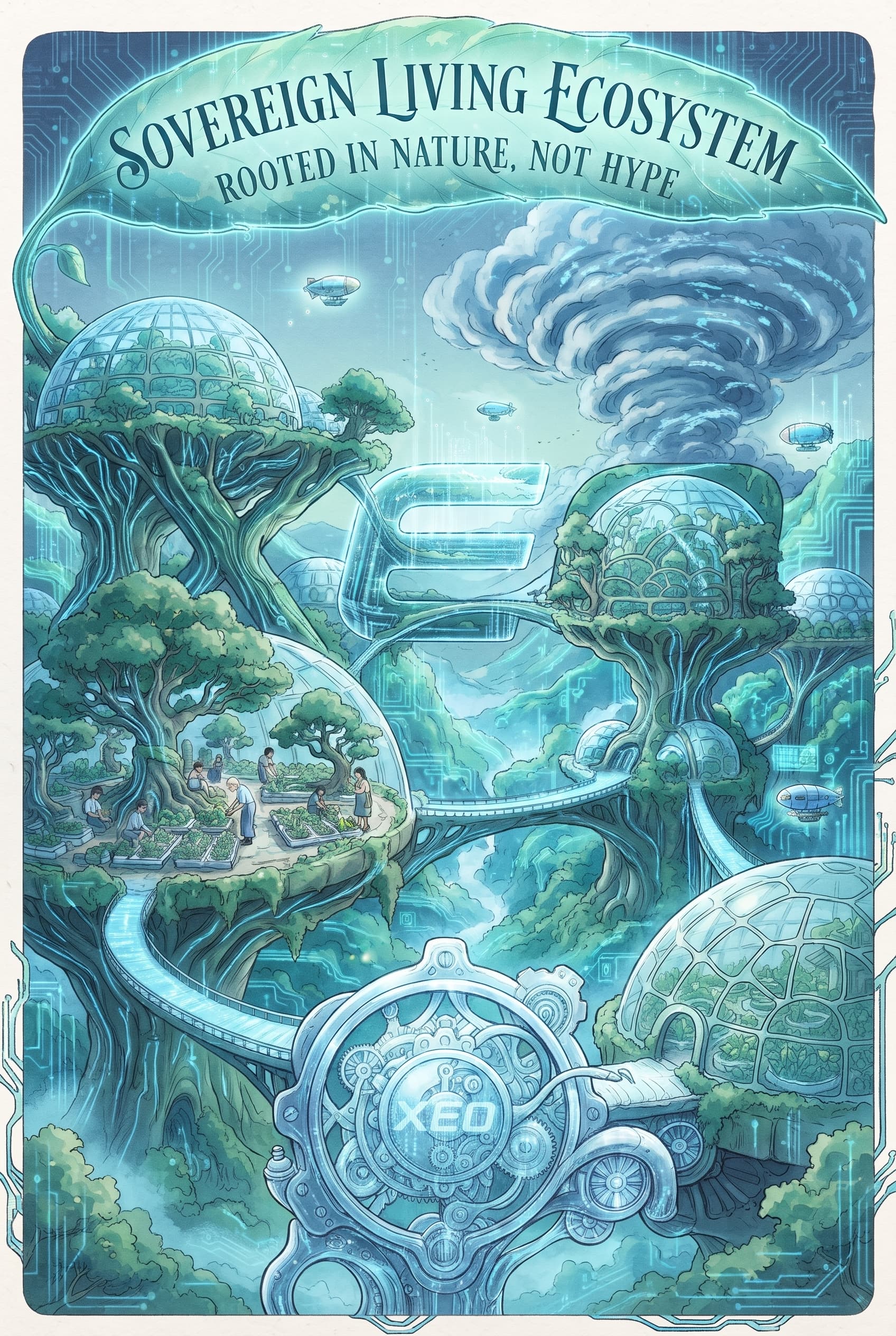
WEB3
The Quiet Genesis: Why XEO is Refusing the Hype Cycle to Build a Sovereign Living Ecosystem
Aug 23, 2026· 2 min

CULTURE
The Bio-Digital Commons: Why Synthetic Biology Requires Decentralized Infrastructure
Jul 24, 2026· 6 min

CULTURE
The Shift Toward Abandoned Mining Shafts for Sovereign Data Center Architecture
Jun 30, 2026· 6 min

CULTURE
Premium Minimalist Hardware and the High-Stakes Economy of Digital Detargeting
Jun 24, 2026· 13 min

CULTURE
Licensing the Mind: The Economics of Generative Agents as High-Yield Digital Assets
Jun 23, 2026· 10 min

WEB3
The Sovereignty Deficit: Why Stablecoin Regulations in Emerging Markets are Forcing Capital Offshore
Jun 18, 2026· 4 min

WEB3
The Missing Piece in GameFi And How XEO Plans to Redefine Ownership, Utility, and Competitive Play
May 27, 2026· 3 min

CULTURE
Cognitive Sanctuary: E-Ink Monitors and the Aristocracy of Attention in the Age of Information Overload
May 22, 2026· 5 min

WEB3
Monero’s War on ASICs and the Structural Economics of Absolute Privacy
May 20, 2026· 10 min

WEB3
Top 10 Proof-of-Work Networks: Efficiency, Hardware Ecosystems, and Market Realities
May 18, 2026· 9 min
Briefs
Latest News

WEB3
XEO Ecosystem Releases Official Track "3.5 Billion Years" Produced by QuixTilt Records
Oct 1, 2026· 1 min

GLOBAL
Inside HSBC and the Bank of England’s Digital Securities Sandbox
Jul 25, 2026· 6 min
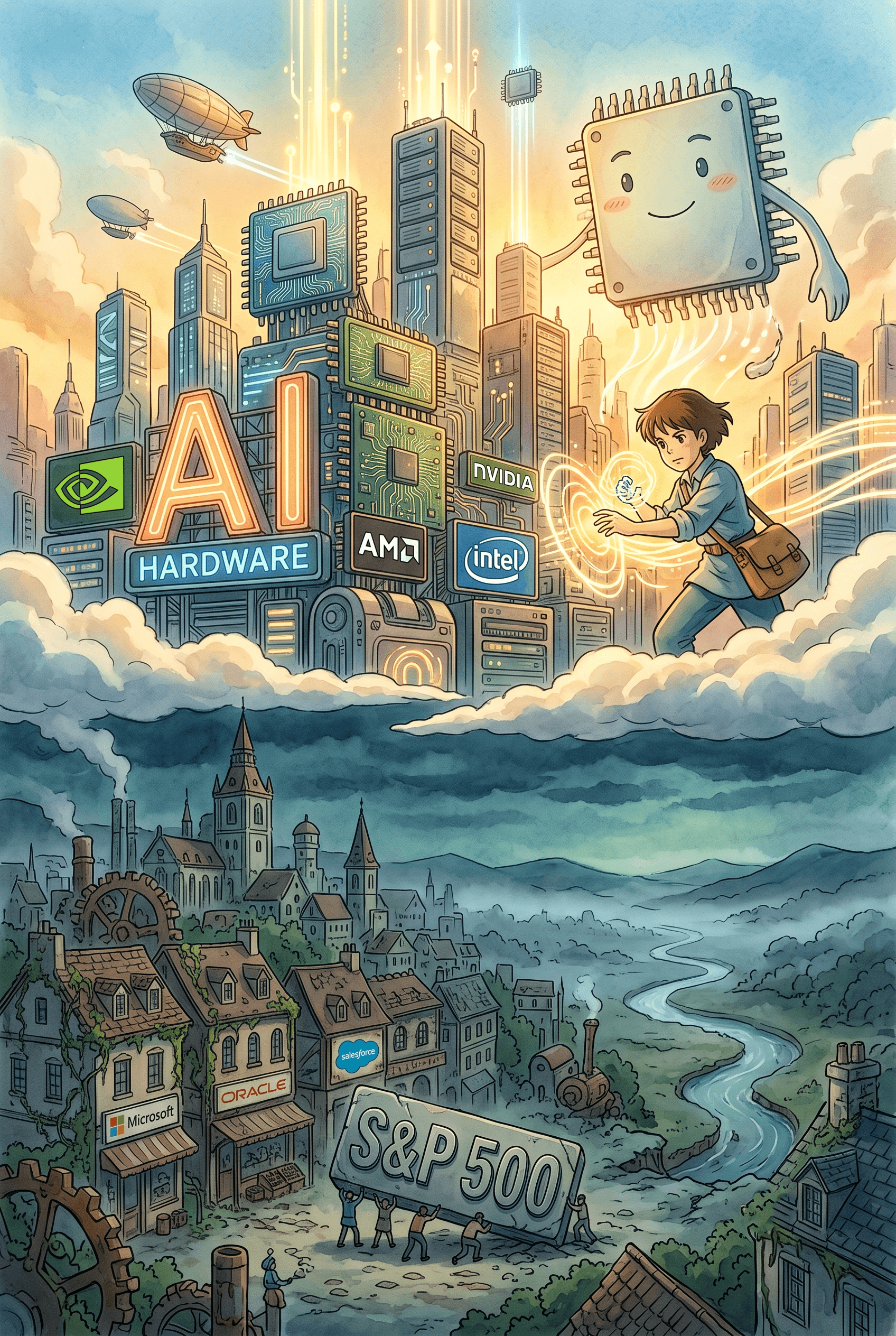
GLOBAL
Why S&P 500 Software is Lagging While AI Hardware Dominates 2026
Jul 25, 2026· 7 min

GLOBAL
Why Wall Street is Re-Valuing SpaceX as an AI Infrastructure Giant
Jul 25, 2026· 8 min
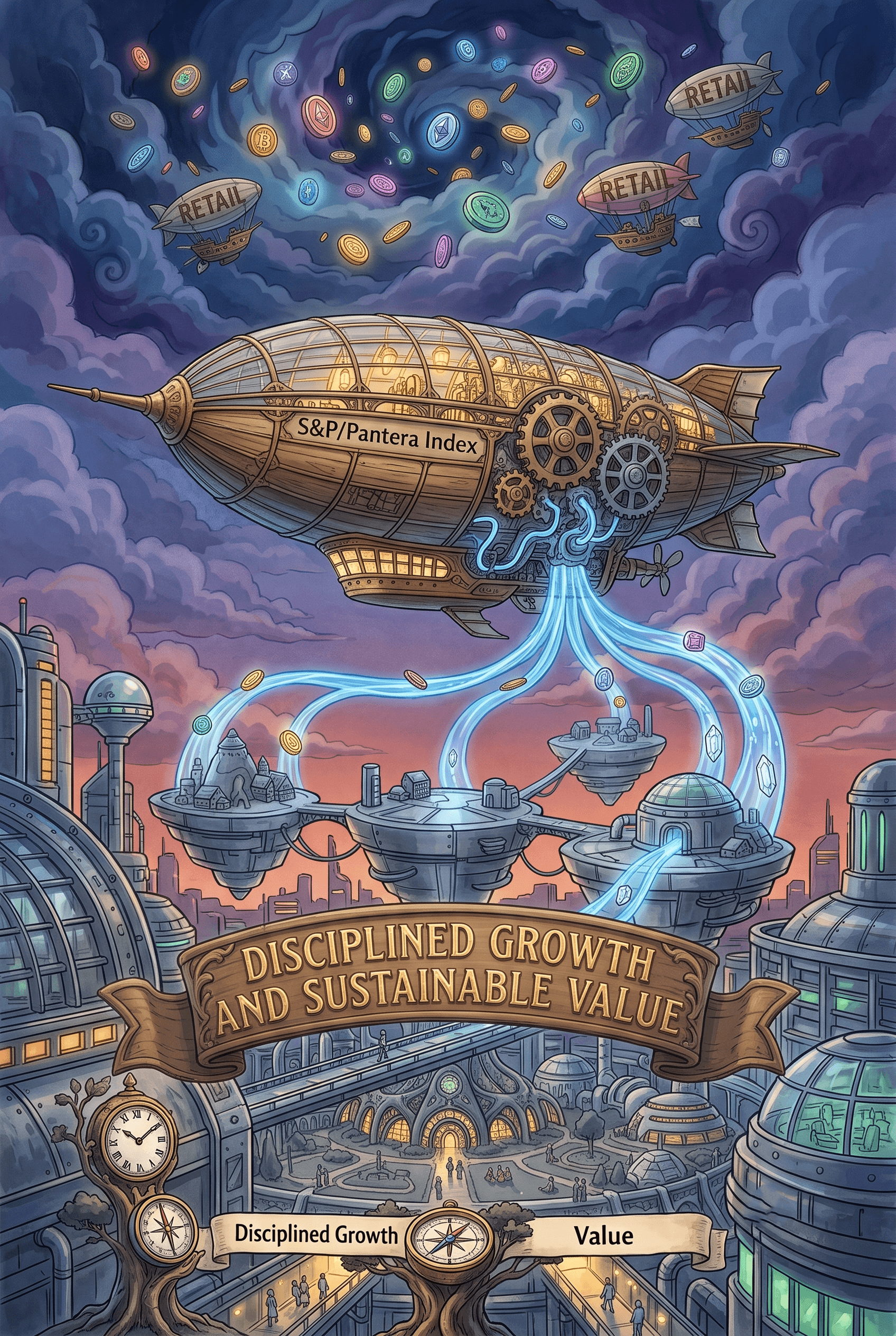
WEB3
S&P and Pantera’s Index Launch and the End of Speculative Token Valuation
Jul 22, 2026· 7 min

GLOBAL
The Algorithmic Border: How Kinetic Supply Chains are Reindexing South China Sea Logistics
Jul 10, 2026· 3 min

WEB3
A Vision Coming to Life: XEO Takes Strategic Steps to Shape the "Living Ecosystem" of the Future
Jul 8, 2026· 2 min

GLOBAL
The Screen Is No Longer Enough: Inside Silicon Valley’s Physical AI Pivot
May 19, 2026· 4 min

GLOBAL
Silicon Valley’s New Cold War: California vs. The White House Over AI Rules
May 19, 2026· 4 min
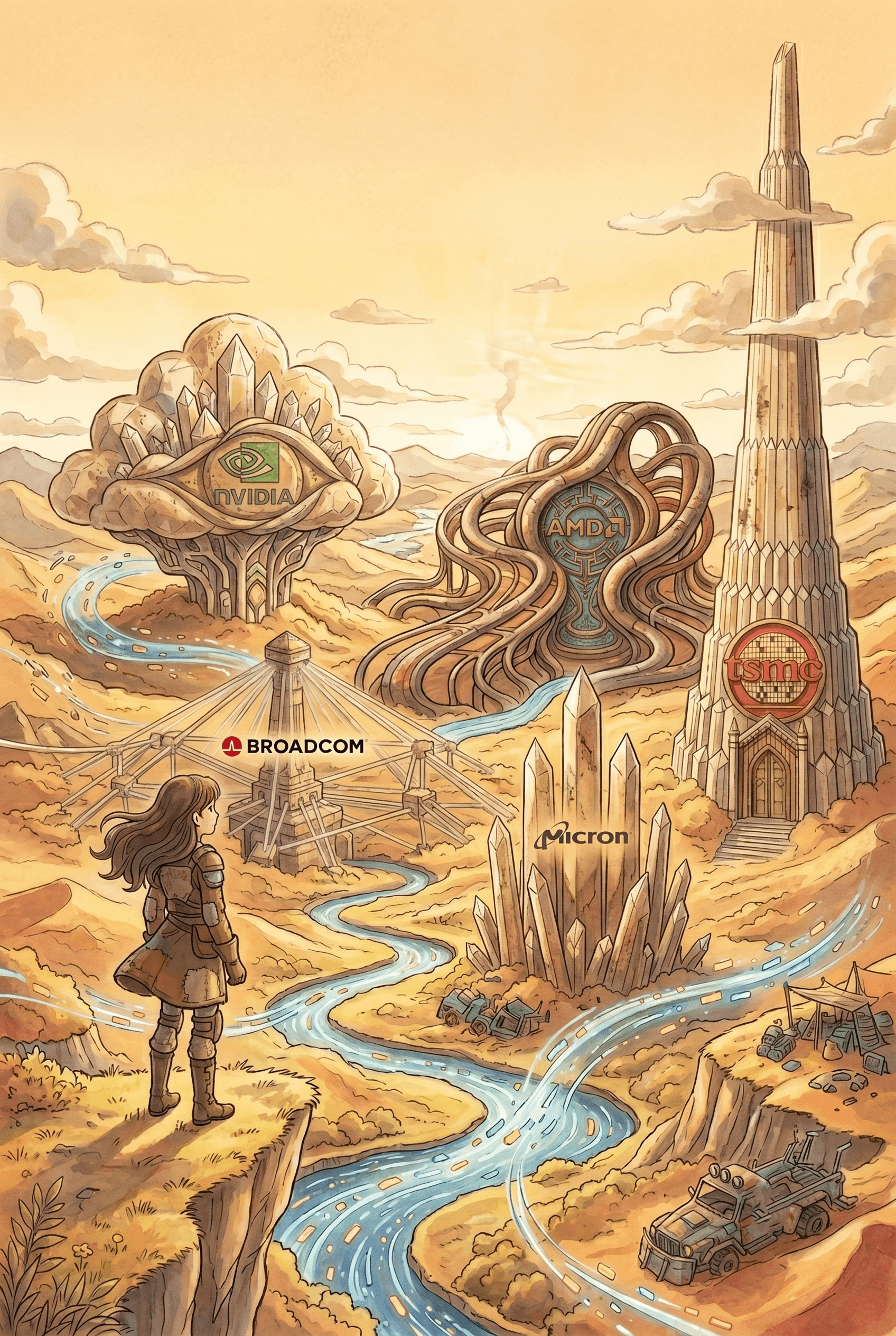
GLOBAL
Top 5 AI Processor Stocks to Watch in 2026
May 19, 2026· 4 min