DeFi 2.0: Financial Superheroes vs. The Trust Paradox
DeFi 2.0 is not just finance—it is a global social experiment where trust shifts from institutions to code and communities.
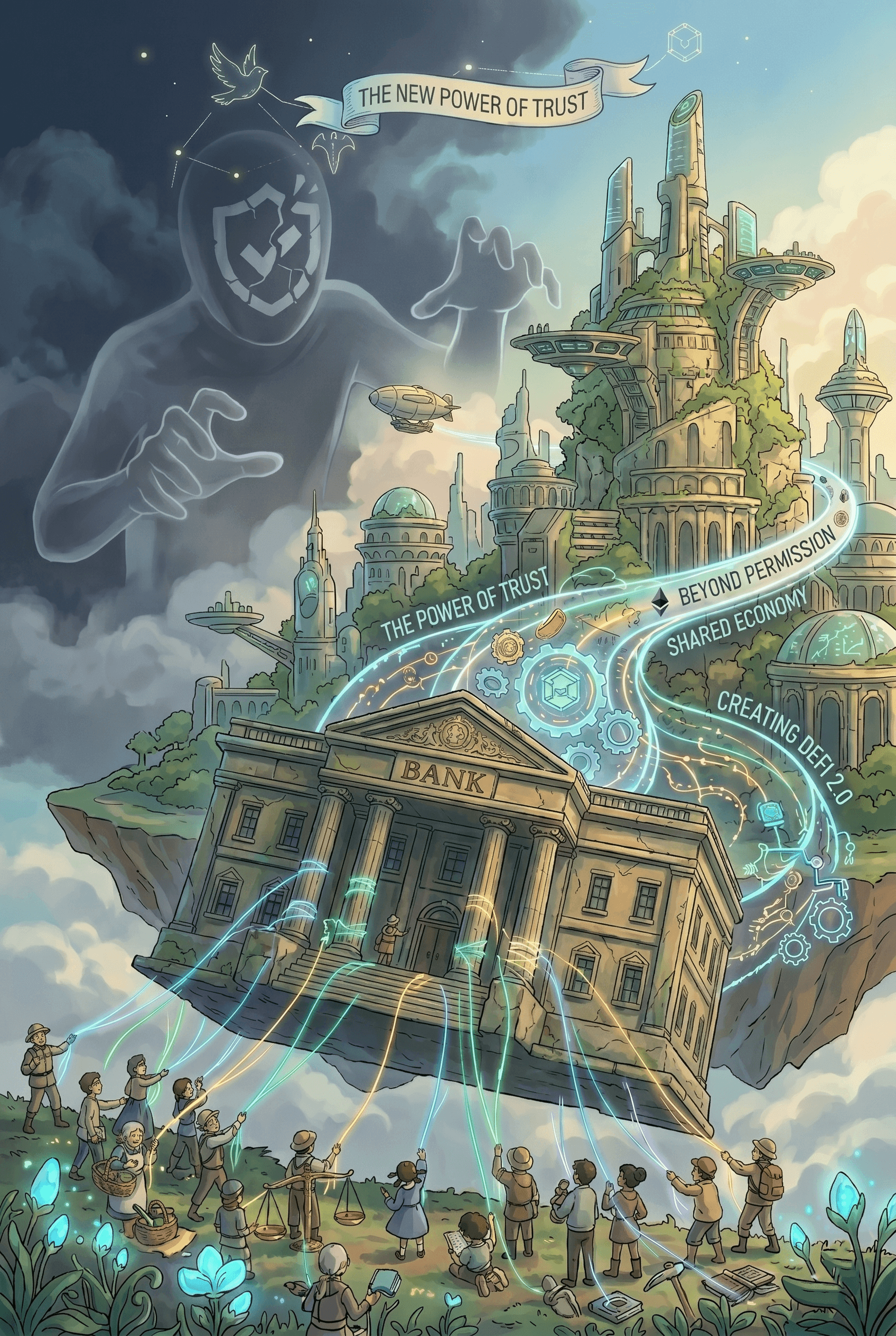
When Code Replaces Institutions, Humans Replace Trust
There was a time when trust had an address.
A building. A logo. A system you could point to and say: “This is where my money is safe.” That system moved slowly, spoke in procedures, and hid behind layers of authority that few ever questioned.
In 2026, that address is gone.
Not replaced—removed.
What has taken its place is something far less visible, and far more complex.
A network of strangers.
DeFi 2.0 is often described in technical terms—liquidity, leverage, yield. But that language misses what is actually happening.
This is not a financial upgrade.
It is a social rewrite.
For the first time, people are not trusting institutions to manage their capital. They are trusting each other—indirectly, anonymously, and at scale.
And that changes the rules completely.
In the traditional system, power was rooted in locality.
Banks were bound to countries. Regulations were tied to governments. Access depended on identity, geography, and the quiet strength of a passport.
Your financial reach was defined by where you were born.
DeFi erased that constraint without asking permission.
A farmer, a developer, a student, a trader—none of them need to belong to the same country, the same system, or even the same culture. With a single transaction, they can enter the same pool, contribute capital, and participate in something that exists nowhere physically, yet operates everywhere simultaneously.
This is not decentralization as a feature.
It is decentralization as a condition.
Individually, these participants are small.
Fragmented.
Limited.
But when connected through protocol, something unexpected happens.
They scale.
Not in the way companies scale, but in the way organisms do. Millions of separate actions begin to behave like a single entity. Capital flows not because it is directed, but because it is collectively decided—often in seconds.
This is where the idea of “financial superheroes” emerges.
Not as individuals, but as a system.
A distributed force made up of ordinary participants, capable of moving liquidity at a speed and scale that traditional institutions struggle to match.
For the first time, coordination itself becomes power.
But coordination without trust is unstable.
And this is where the paradox begins.
Because DeFi does not eliminate trust.
It relocates it.
In theory, users trust the code.
Smart contracts execute automatically. Rules are predefined. Outcomes are deterministic. There is no human intervention, no negotiation, no discretion.
But in practice, no system exists in isolation.
People still ask questions.
Who wrote the code?
Who controls the upgrade keys?
Who holds the majority of tokens?
Who can leave—and when?
These questions do not disappear just because the system is decentralized.
They multiply.
The memory of DeFi 1.0 still lingers.
Rug pulls. Exploits. Sudden collapses that erased millions in seconds. These were not just financial losses. They were psychological events. They rewired how participants approach risk, how they interpret signals, how quickly they decide to enter—or exit.
Trust, in this environment, becomes fragile.
Not absent.
Just unstable.
This creates a state of constant vigilance.
Communities move together, but they do not relax. They monitor each other, the code, the behavior of large holders, the smallest irregularity that could signal danger. Growth can be explosive, but so can collapse.
A project does not fail slowly.
It disappears.
And yet, despite all of this, people continue to participate.
Because the alternative feels worse.
A system where access is restricted, decisions are centralized, and capital moves only with permission no longer aligns with how the world operates.
DeFi does not feel safe.
But it feels free.
This is the core tension of DeFi 2.0.
Freedom without guarantees.
Access without protection.
Scale without stability.
Some projects attempt to resolve this by introducing governance.
DAOs, voting mechanisms, transparency layers—structures designed to translate trust into something more durable. Not blind belief, but shared responsibility. Not authority, but alignment.
When these systems work, they create something rare.
Not just financial coordination, but social cohesion.
A group that does not just invest together, but decides together.
This is where DeFi begins to move beyond finance.
Because what is being tested is not just how money flows.
It is how humans organize.
Borders, in this context, become irrelevant.
A liquidity pool does not recognize nationality. A protocol does not enforce geography. Participation is defined by connection, not location.
In a world increasingly divided by politics, DeFi quietly builds a different structure.
A digital village where cooperation is optional—but powerful.
But villages can collapse if trust disappears.
And this is the line DeFi 2.0 continues to walk.
Between coordination and chaos.
Between empowerment and exposure.
Between collective strength and collective fear.
The idea of millions of financial superheroes is compelling.
But heroes, by definition, act with purpose.
Without that, they are just participants moving capital without direction.
The long-term survival of DeFi will not be decided by code alone.
It will be decided by behavior.
By whether communities can move beyond fear, beyond short-term extraction, beyond the instinct to leave at the first sign of risk.
Because a system built only for speed will eventually break.
A system built for continuity can evolve.
DeFi 2.0 is not the end of banking.
It is the beginning of a different kind of institution.
One that is not defined by buildings or governments, but by the ability of people to coordinate without them.
The question is no longer whether this model works.
It already does.
The question is whether it can last.
Because in a system where everyone is free to leave,
the only thing that holds it together…
is trust.
Enjoyed this story?
More for you
Keep reading

Why Ethereum’s Path to $12,000 Requires a Descent to $1,350
The mathematical architecture of global capital is hitting a reset button. While Ethereum's long-term structure points to a five-figure valuation, macroeconomic forces and institutional liquidity dynamics suggest a profound market flush toward $1,350 must happen first.
Read moreFrom the feed
Latest Articles
WEB3
The Quiet Genesis: Why XEO is Refusing the Hype Cycle to Build a Sovereign Living Ecosystem
Aug 23, 2026· 2 min

CULTURE
The Bio-Digital Commons: Why Synthetic Biology Requires Decentralized Infrastructure
Jul 24, 2026· 6 min

CULTURE
The Shift Toward Abandoned Mining Shafts for Sovereign Data Center Architecture
Jun 30, 2026· 6 min

CULTURE
Premium Minimalist Hardware and the High-Stakes Economy of Digital Detargeting
Jun 24, 2026· 13 min

CULTURE
Licensing the Mind: The Economics of Generative Agents as High-Yield Digital Assets
Jun 23, 2026· 10 min

WEB3
The Sovereignty Deficit: Why Stablecoin Regulations in Emerging Markets are Forcing Capital Offshore
Jun 18, 2026· 4 min

WEB3
The Missing Piece in GameFi And How XEO Plans to Redefine Ownership, Utility, and Competitive Play
May 27, 2026· 3 min

CULTURE
Cognitive Sanctuary: E-Ink Monitors and the Aristocracy of Attention in the Age of Information Overload
May 22, 2026· 5 min
WEB3
Monero’s War on ASICs and the Structural Economics of Absolute Privacy
May 20, 2026· 10 min

WEB3
Top 10 Proof-of-Work Networks: Efficiency, Hardware Ecosystems, and Market Realities
May 18, 2026· 9 min
Briefs
Latest News
WEB3
XEO Ecosystem Releases Official Track "3.5 Billion Years" Produced by QuixTilt Records
Oct 1, 2026· 1 min

GLOBAL
Inside HSBC and the Bank of England’s Digital Securities Sandbox
Jul 25, 2026· 6 min
GLOBAL
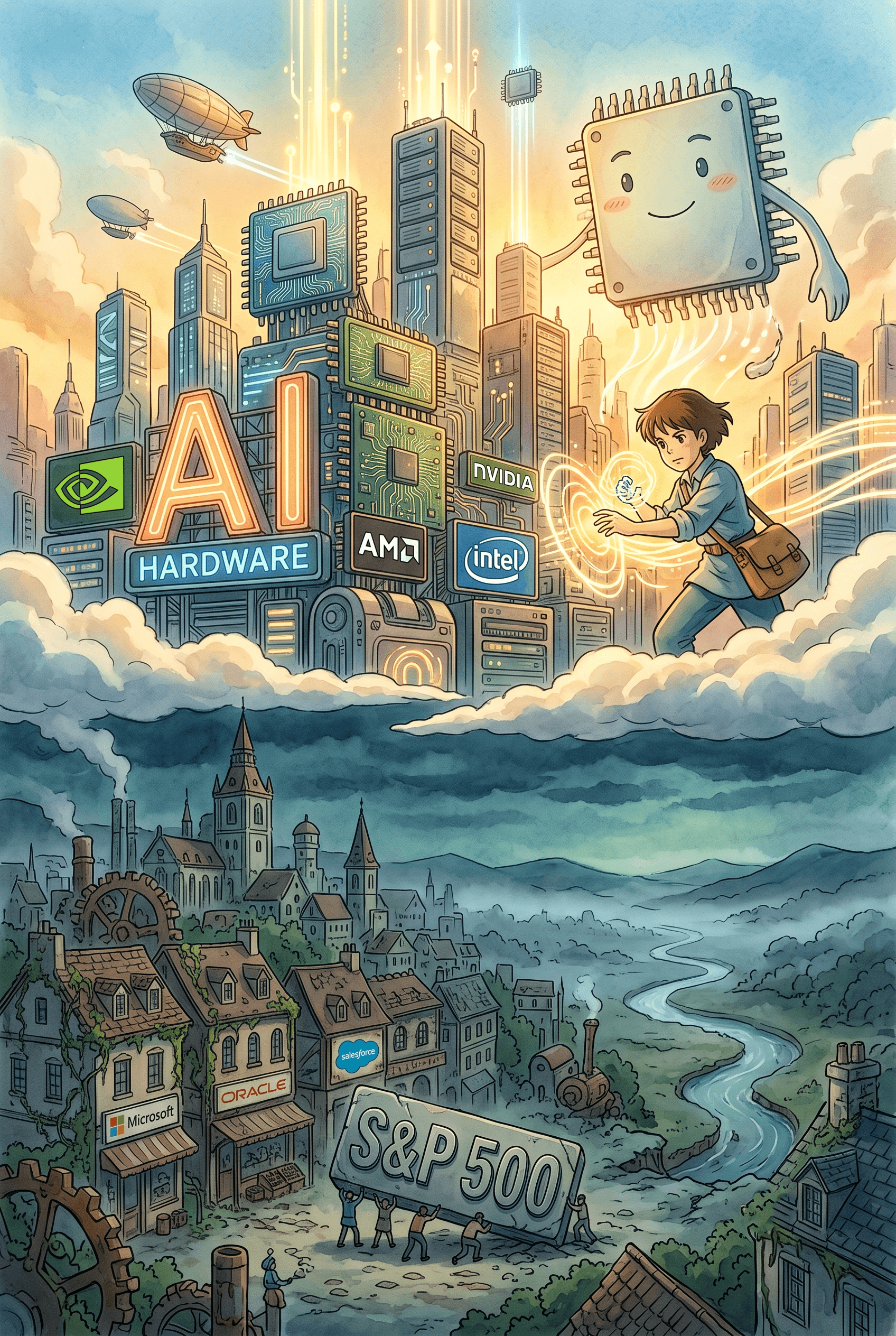
Why S&P 500 Software is Lagging While AI Hardware Dominates 2026
Jul 25, 2026· 7 min
GLOBAL
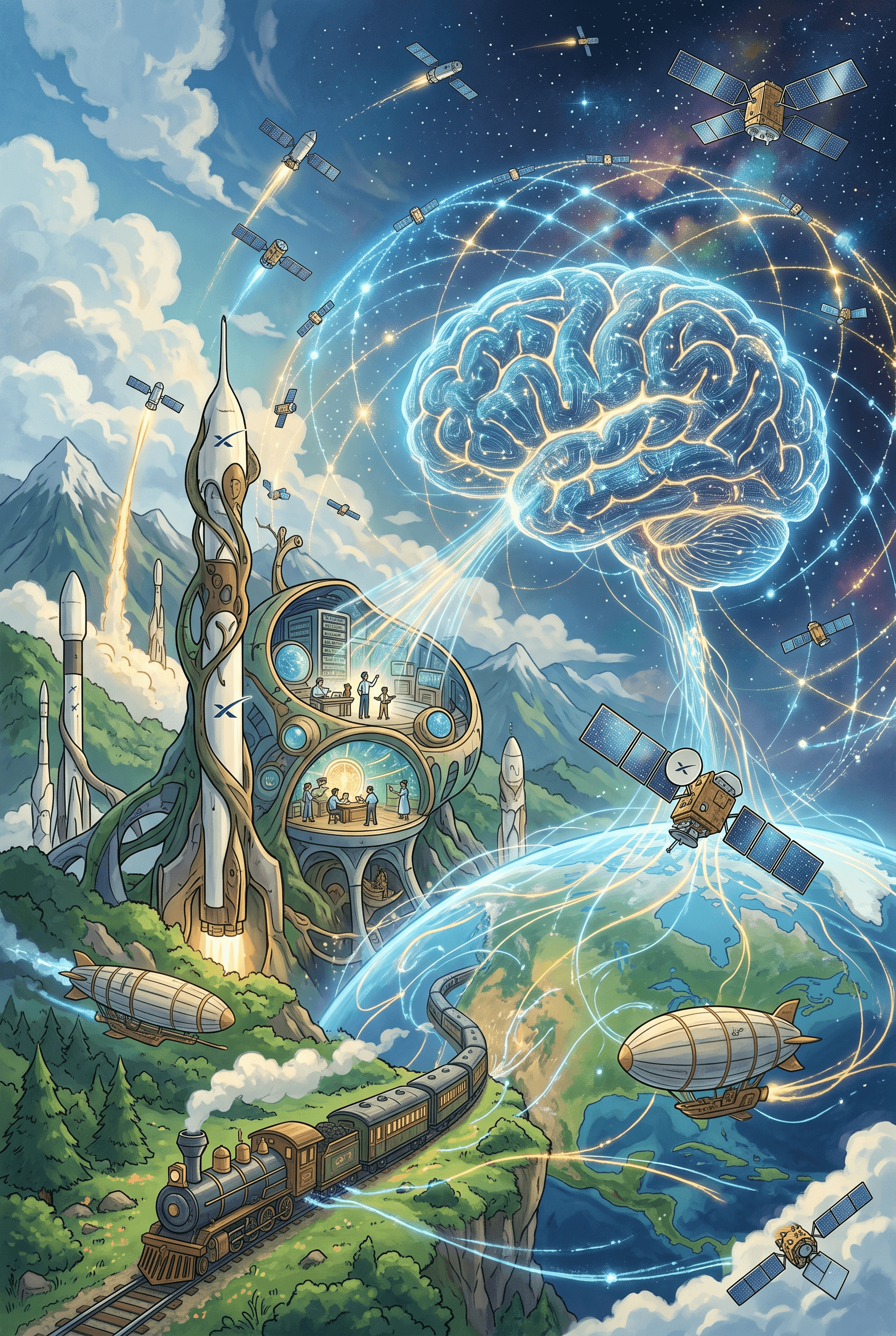
Why Wall Street is Re-Valuing SpaceX as an AI Infrastructure Giant
Jul 25, 2026· 8 min
WEB3
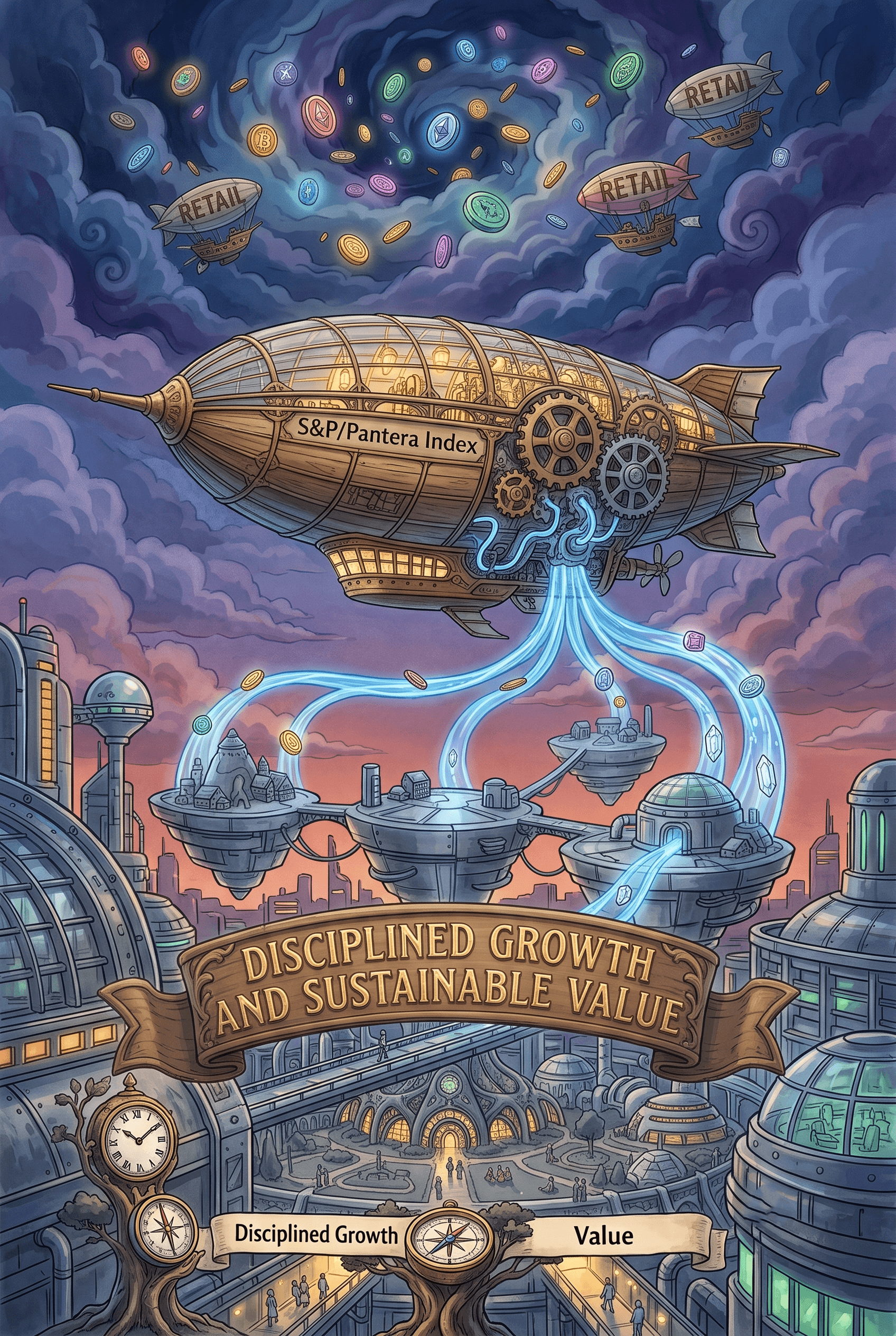
S&P and Pantera’s Index Launch and the End of Speculative Token Valuation
Jul 22, 2026· 7 min

GLOBAL
The Algorithmic Border: How Kinetic Supply Chains are Reindexing South China Sea Logistics
Jul 10, 2026· 3 min

WEB3
A Vision Coming to Life: XEO Takes Strategic Steps to Shape the "Living Ecosystem" of the Future
Jul 8, 2026· 2 min

GLOBAL
The Screen Is No Longer Enough: Inside Silicon Valley’s Physical AI Pivot
May 19, 2026· 4 min

GLOBAL
Silicon Valley’s New Cold War: California vs. The White House Over AI Rules
May 19, 2026· 4 min
GLOBAL
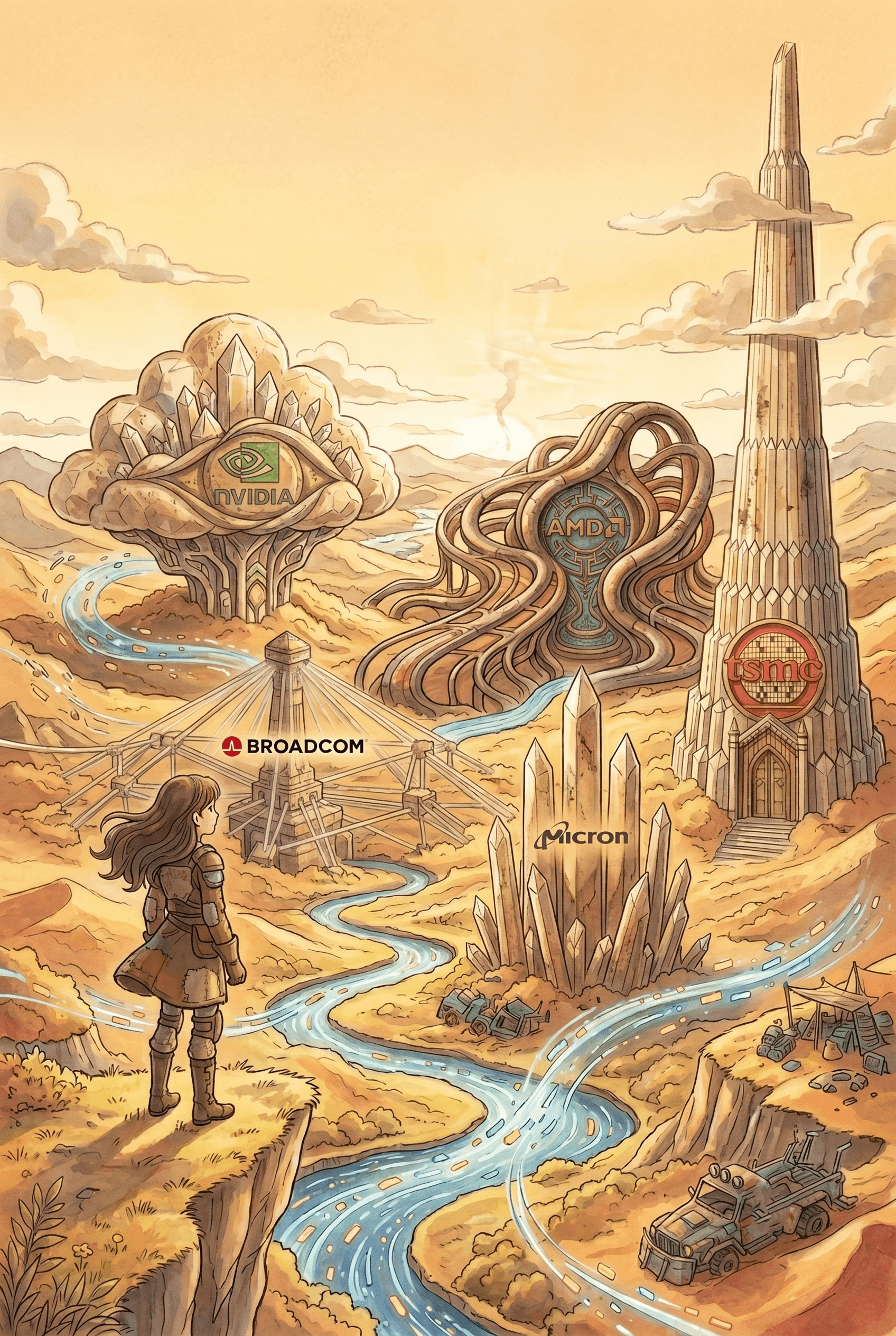
Top 5 AI Processor Stocks to Watch in 2026
May 19, 2026· 4 min