The Fragile Internet Era: What This Week’s Biggest Tech Stories Are Really Telling Us
From cyberattacks and fake engagement crackdowns to gaming industry losses and rising subscription costs, this week’s biggest tech stories reveal a deeper reality: the internet is no longer lightweight infrastructure.

At first glance, this week’s biggest technology stories appeared completely unrelated.
A cyberattack disrupted thousands of schools connected to the Canvas ecosystem. Twitch introduced aggressive measures against artificial viewership inflation. Sony reportedly absorbed massive losses tied to Bungie and Marathon. Nintendo raised prices across parts of its Switch 2 and online service ecosystem.
Different industries. Different audiences. Different business models.
But beneath the surface, all four stories point toward the same underlying reality:
The internet is no longer a lightweight digital playground.
It has become civilization-scale infrastructure.
And that infrastructure is beginning to show visible stress fractures.
The Canvas cyberattack may be the clearest example of modern digital dependency becoming systemic risk. Nearly 9,000 institutions reportedly experienced disruption tied to a centralized educational ecosystem. What once would have been considered a “technical issue” instantly evolved into a societal disruption affecting communication, coursework, examinations, and administration simultaneously.
The event exposed something larger than cybersecurity vulnerabilities alone. Modern institutions increasingly operate inside unified cloud environments where convenience and efficiency come at the cost of systemic fragility. When infrastructure centralizes, failure centralizes with it.
Education is no longer partially digital.
It is structurally digital.
And structures can break.
At the same time, Twitch’s move against viewbotting revealed another fracture inside the internet economy: the collapse of trust in digital metrics.
For years, the platform economy rewarded visibility above authenticity. Views, followers, engagement numbers, and algorithmic momentum became currencies powerful enough to shape entire careers. Artificial growth was not simply tolerated—it was indirectly incentivized by the architecture of recommendation systems themselves.
Now platforms are beginning to realize the long-term danger.
If audiences no longer trust metrics, the ecosystem itself loses credibility.
Twitch’s response signals a broader transition happening across the creator economy. Platforms are slowly moving away from raw growth obsession toward behavioral legitimacy and audience authenticity. The age of infinite artificial amplification may finally be colliding with economic reality.
Then came Sony and Bungie.
The reported losses surrounding Marathon are not just a gaming story. They are a warning about the unsustainable scale of modern entertainment production.
AAA gaming budgets now resemble Hollywood-level investments, yet player attention spans move faster than ever before. A game no longer competes against a handful of rivals. It competes against an endless ecosystem of social media feeds, livestream platforms, live-service games, AI-generated entertainment, and algorithmically optimized content loops.
Even globally recognized studios are discovering that cultural momentum cannot simply be manufactured through capital alone.
The live-service era promised recurring revenue and permanent engagement. Instead, many companies are discovering that maintaining digital ecosystems indefinitely may be financially exhausting even for industry giants.
The economics of permanence are becoming brutally expensive.
Nintendo’s pricing increases complete the picture.
For decades, gaming companies primarily sold hardware and software products. Today they operate persistent digital infrastructures: cloud systems, multiplayer networks, subscription ecosystems, identity systems, storefronts, synchronization layers, and live content platforms.
The cost structure has fundamentally changed.
A modern console is no longer just a machine sitting beneath a television. It is an entry point into a continuously operating digital environment requiring permanent maintenance and global-scale infrastructure spending.
That transformation is quietly reshaping the economics of entertainment itself.
Subscriptions rise.
Operational costs rise.
Infrastructure dependence rises.
And users increasingly pay not for ownership—but for continued access.
This is the deeper connection tying all four stories together.
The internet economy spent nearly two decades expanding under the assumption that scale itself was stability. Bigger platforms appeared safer. Larger ecosystems appeared stronger. More centralized systems appeared more efficient.
But scale creates gravity.
And eventually, gravity creates pressure.
Cyberattacks become larger.
Fake engagement becomes industrialized.
Development budgets become unsustainable.
Infrastructure maintenance becomes permanent.
The internet is maturing into something far heavier than the optimistic digital frontier many imagined in the early platform era.
It is becoming a civilization-layer operating system.
And civilization-layer systems are fragile in ways most users never notice—until they fail in public.
Enjoyed this story?
More for you
Keep reading
Google’s Ecosystem Shift and Sony’s Supply Chain Dilemma
As Google unifies its Android and ChromeOS platforms under "Aluminium OS" to establish a new category of AI-driven laptops, Sony re-evaluates its timeline for the PlayStation 6 due to ongoing global supply chain constraints.
Read moreBriefs
Latest News
WEB3
XEO Ecosystem Releases Official Track "3.5 Billion Years" Produced by QuixTilt Records
Oct 1, 2026· 1 min

GLOBAL
Inside HSBC and the Bank of England’s Digital Securities Sandbox
Jul 25, 2026· 6 min
GLOBAL
Why S&P 500 Software is Lagging While AI Hardware Dominates 2026
Jul 25, 2026· 7 min
GLOBAL
Why Wall Street is Re-Valuing SpaceX as an AI Infrastructure Giant
Jul 25, 2026· 8 min
WEB3
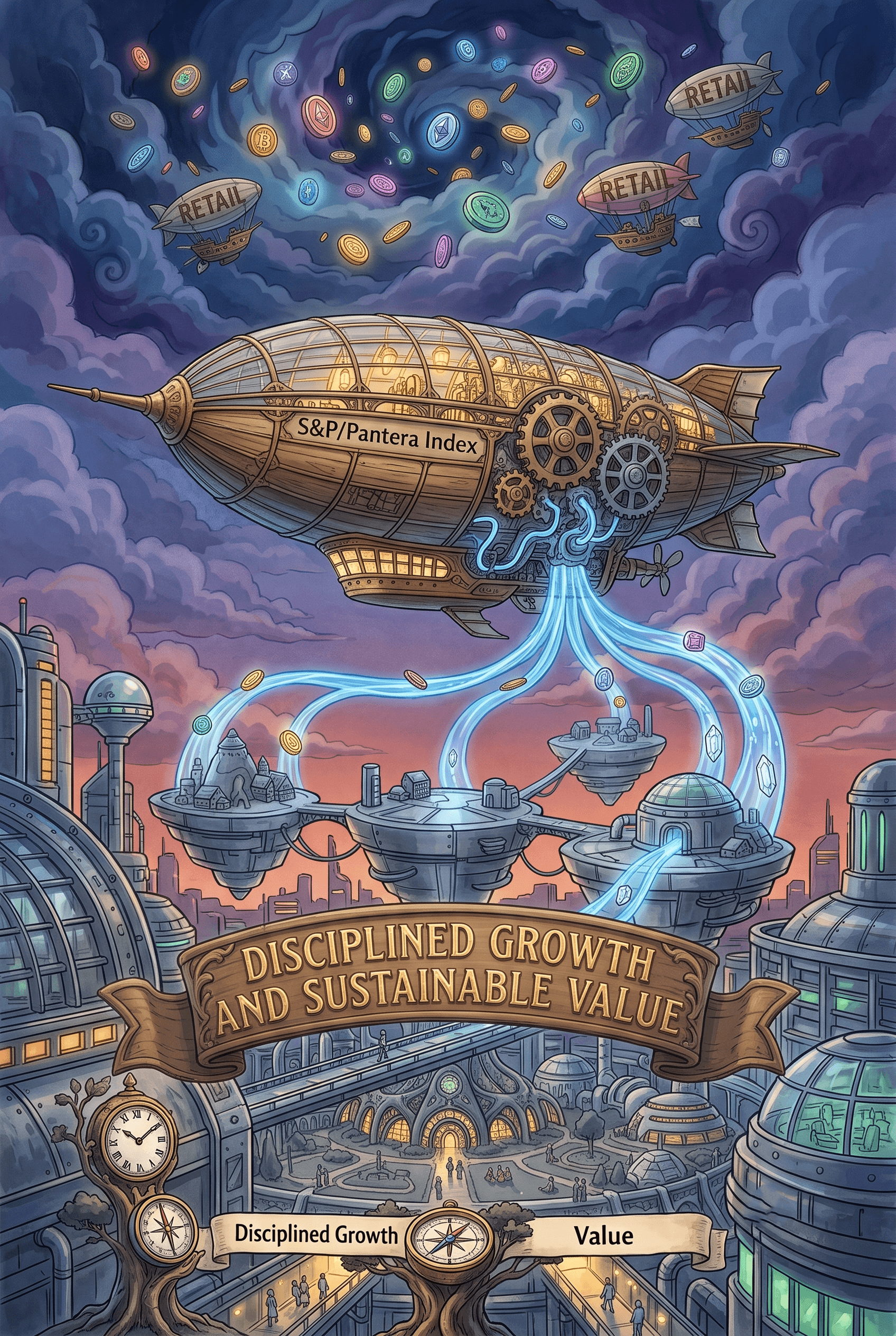
S&P and Pantera’s Index Launch and the End of Speculative Token Valuation
Jul 22, 2026· 7 min

GLOBAL
The Algorithmic Border: How Kinetic Supply Chains are Reindexing South China Sea Logistics
Jul 10, 2026· 3 min

WEB3
A Vision Coming to Life: XEO Takes Strategic Steps to Shape the "Living Ecosystem" of the Future
Jul 8, 2026· 2 min

GLOBAL
The Screen Is No Longer Enough: Inside Silicon Valley’s Physical AI Pivot
May 19, 2026· 4 min

GLOBAL
Silicon Valley’s New Cold War: California vs. The White House Over AI Rules
May 19, 2026· 4 min
GLOBAL
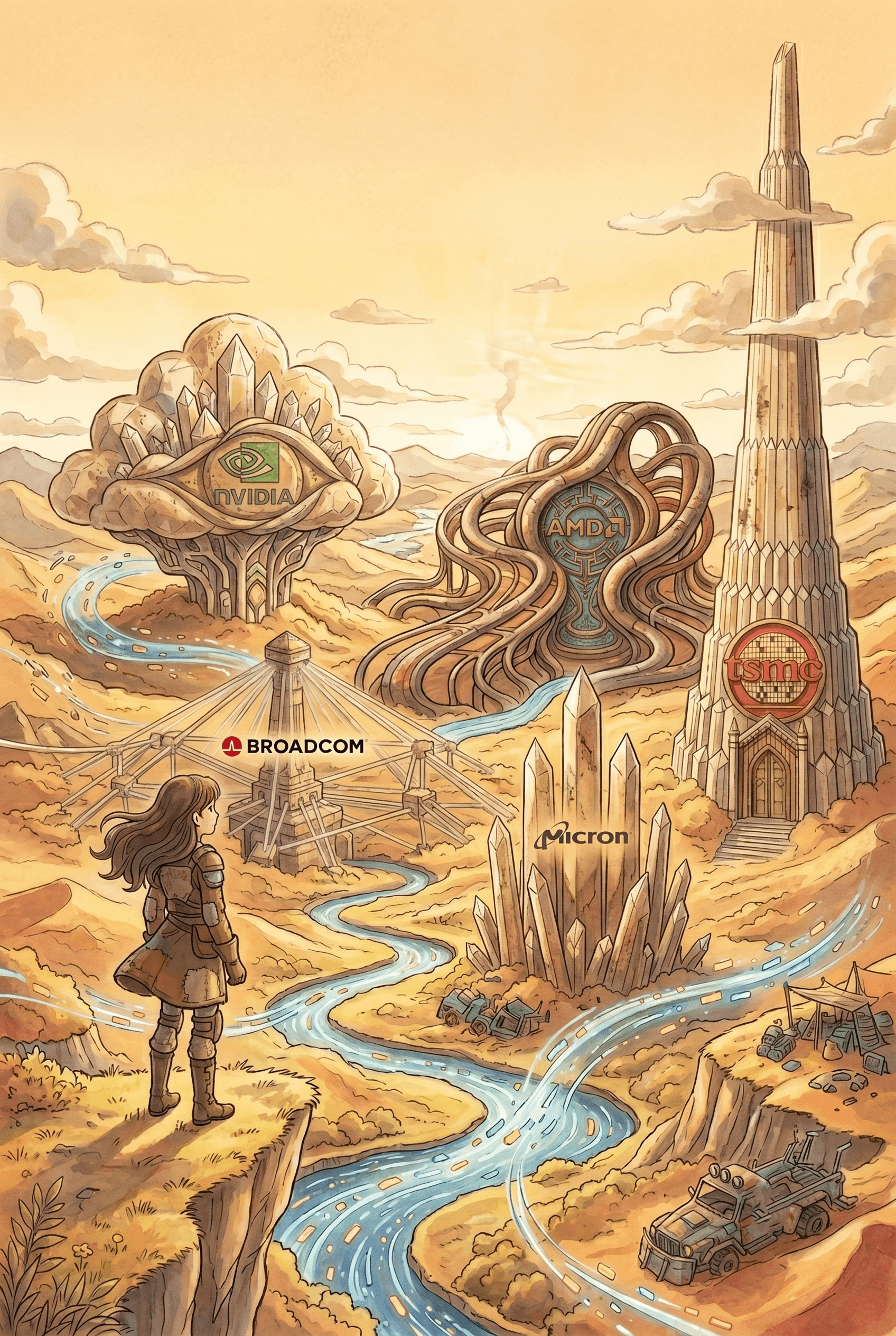
Top 5 AI Processor Stocks to Watch in 2026
May 19, 2026· 4 min
From the feed
Latest Articles
WEB3
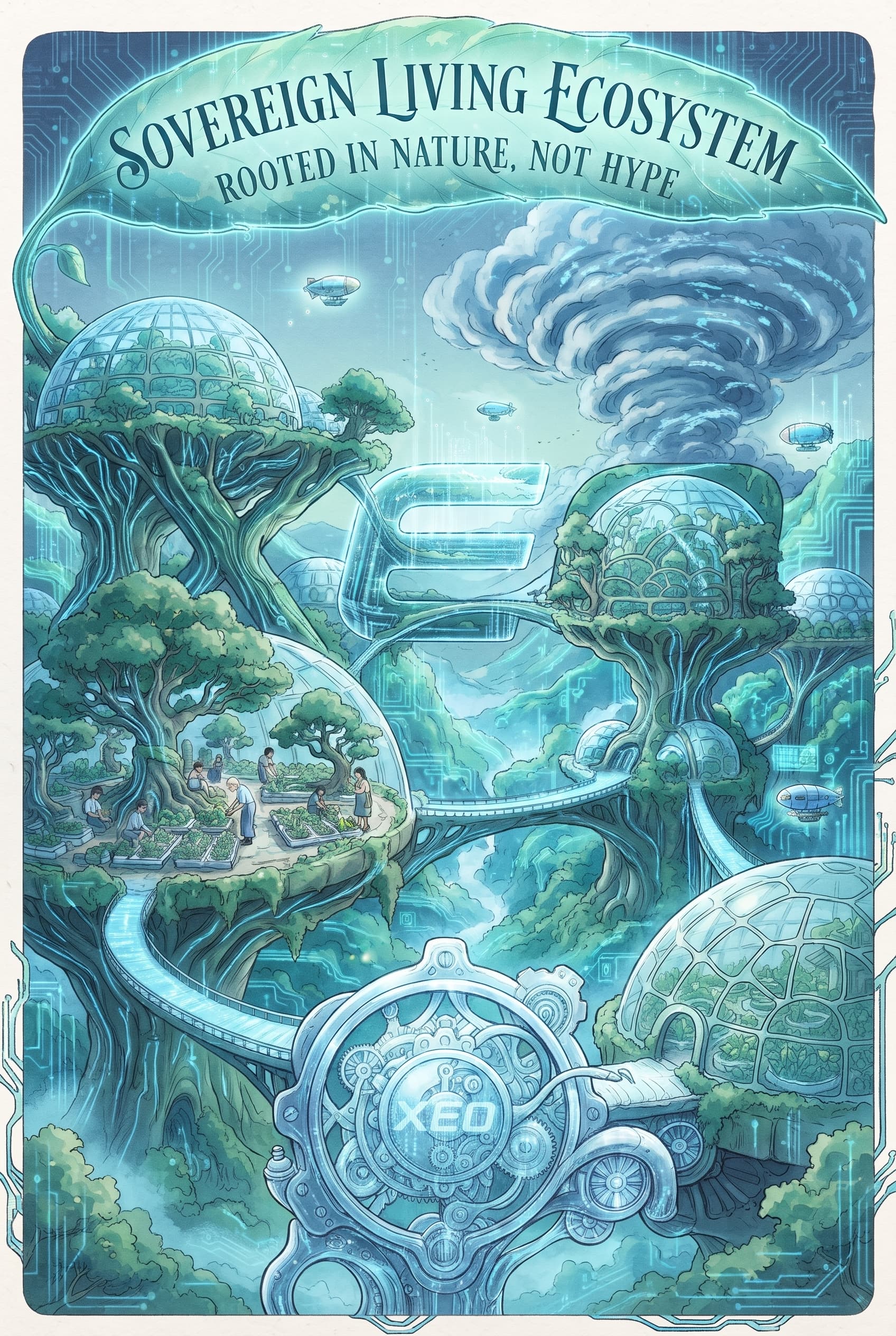
The Quiet Genesis: Why XEO is Refusing the Hype Cycle to Build a Sovereign Living Ecosystem
Aug 23, 2026· 2 min

CULTURE
The Bio-Digital Commons: Why Synthetic Biology Requires Decentralized Infrastructure
Jul 24, 2026· 6 min

CULTURE
The Shift Toward Abandoned Mining Shafts for Sovereign Data Center Architecture
Jun 30, 2026· 6 min

CULTURE
Premium Minimalist Hardware and the High-Stakes Economy of Digital Detargeting
Jun 24, 2026· 13 min

CULTURE
Licensing the Mind: The Economics of Generative Agents as High-Yield Digital Assets
Jun 23, 2026· 10 min

WEB3
The Sovereignty Deficit: Why Stablecoin Regulations in Emerging Markets are Forcing Capital Offshore
Jun 18, 2026· 4 min

WEB3
The Missing Piece in GameFi And How XEO Plans to Redefine Ownership, Utility, and Competitive Play
May 27, 2026· 3 min

CULTURE
Cognitive Sanctuary: E-Ink Monitors and the Aristocracy of Attention in the Age of Information Overload
May 22, 2026· 5 min
WEB3
Monero’s War on ASICs and the Structural Economics of Absolute Privacy
May 20, 2026· 10 min

WEB3
Top 10 Proof-of-Work Networks: Efficiency, Hardware Ecosystems, and Market Realities
May 18, 2026· 9 min