Is Ethereum Losing Its Edge? A Reality Check on Speed, Fees, and Institutional Trust
Ethereum remains dominant in trust and institutional adoption, but rising competition from faster and cheaper blockchains is reshaping the narrative.

For years, Ethereum has held a unique position in the digital asset ecosystem. It wasn’t just another blockchain—it became the foundation for decentralized finance, NFTs, and a large portion of Web3 infrastructure.
But dominance in technology is never permanent.
And today, the conversation around Ethereum is no longer about what it built—but whether it can maintain its edge in a rapidly evolving landscape.
The pressure is coming from multiple directions, but the most visible comparison is with Solana.
On the surface, the contrast is straightforward.
Solana is faster.
Solana is cheaper.
That alone is enough to attract attention.
But the real question isn’t whether Solana outperforms Ethereum in raw metrics.
It’s whether those metrics are enough to challenge Ethereum’s position at the center of the ecosystem.
Speed has become one of the most frequently cited criticisms of Ethereum.
The base layer, by design, prioritizes decentralization and security over throughput. This makes it robust—but slower compared to newer blockchains optimized for high transaction volumes.
Solana, on the other hand, was built with performance as a primary objective. Its architecture allows for significantly higher transaction speeds, making it appealing for applications that require real-time interaction, such as gaming and high-frequency trading environments.
From a user perspective, the difference is noticeable.
Transactions that take seconds—or even minutes—on Ethereum can feel outdated in a market that increasingly expects instant execution.
Fees tell a similar story.
Ethereum’s gas fees have long been a point of friction, especially during periods of high network activity. While improvements and scaling solutions have reduced some of this pressure, the perception remains.
Users associate Ethereum with cost.
Solana, by contrast, offers near-zero transaction fees, making it more accessible for everyday usage and experimentation.
For developers building consumer-facing applications, this difference is not trivial.
Lower fees reduce barriers.
And lower barriers attract users.
“Speed attracts attention. Cost attracts users.”
If the conversation ended here, the conclusion would be simple.
But it doesn’t.
Because Ethereum’s strength has never been limited to speed or cost.
Institutional trust is where Ethereum continues to dominate.
Major financial entities have consistently shown a preference for Ethereum’s ecosystem. From tokenized assets to infrastructure development, Ethereum is often treated as the default layer for serious, long-term projects.
This is not accidental.
Ethereum’s slower, more deliberate approach to development has created an environment that prioritizes stability, security, and predictability—qualities that institutions value far more than raw performance.
While faster chains experiment, Ethereum solidifies.
This dynamic creates a divergence in how different audiences perceive the ecosystem.
Retail users often gravitate toward speed and low fees.
Institutions prioritize reliability and trust.
Ethereum sits firmly in the second category.
“Ethereum is not optimized for speed. It is optimized for permanence.”
There is also an important nuance often overlooked in surface-level comparisons.
Ethereum is no longer a single-layer story.
The rise of Layer 2 solutions has fundamentally changed how the network operates. Instead of scaling directly on the base layer, Ethereum is evolving into a settlement layer, with execution increasingly happening on secondary networks.
This shifts the conversation.
Speed and cost are no longer solely determined by Ethereum itself, but by the broader ecosystem built on top of it.
While critics point to base layer limitations, supporters argue that this modular approach is more sustainable in the long term.
At the same time, Solana’s model presents its own trade-offs.
Higher throughput often comes at the cost of increased centralization and operational complexity. Network outages and stability concerns have been part of Solana’s history, raising questions about reliability at scale.
This doesn’t negate its advantages—but it reframes them.
Performance is valuable.
Consistency is critical.
The market is beginning to reflect this duality.
Solana continues to gain momentum, particularly in sectors that prioritize user experience and speed. Ethereum, meanwhile, retains its position as the backbone of high-value, institutional-grade applications.
This is not a zero-sum competition.
It’s a divergence of roles.
“Different chains are not replacing each other. They are specializing.”
The idea that one blockchain will dominate everything is becoming less realistic.
Instead, the ecosystem is fragmenting into layers of specialization.
Fast chains for execution.
Stable chains for settlement.
Hybrid models emerging in between.
So, is Ethereum losing its edge?
The answer depends on how “edge” is defined.
If edge means raw performance, then yes—Ethereum is no longer leading.
If edge means trust, adoption, and long-term positioning, the answer is very different.
Ethereum remains deeply embedded in the infrastructure of the digital asset economy.
And that kind of position is not easily replaced.
The more accurate question may not be whether Ethereum is losing its edge, but whether the definition of advantage is changing.
Because in a multi-chain world, dominance is no longer about being the fastest.
It’s about being indispensable.
And for now, Ethereum still is.
Enjoyed this story?
More for you
Keep reading
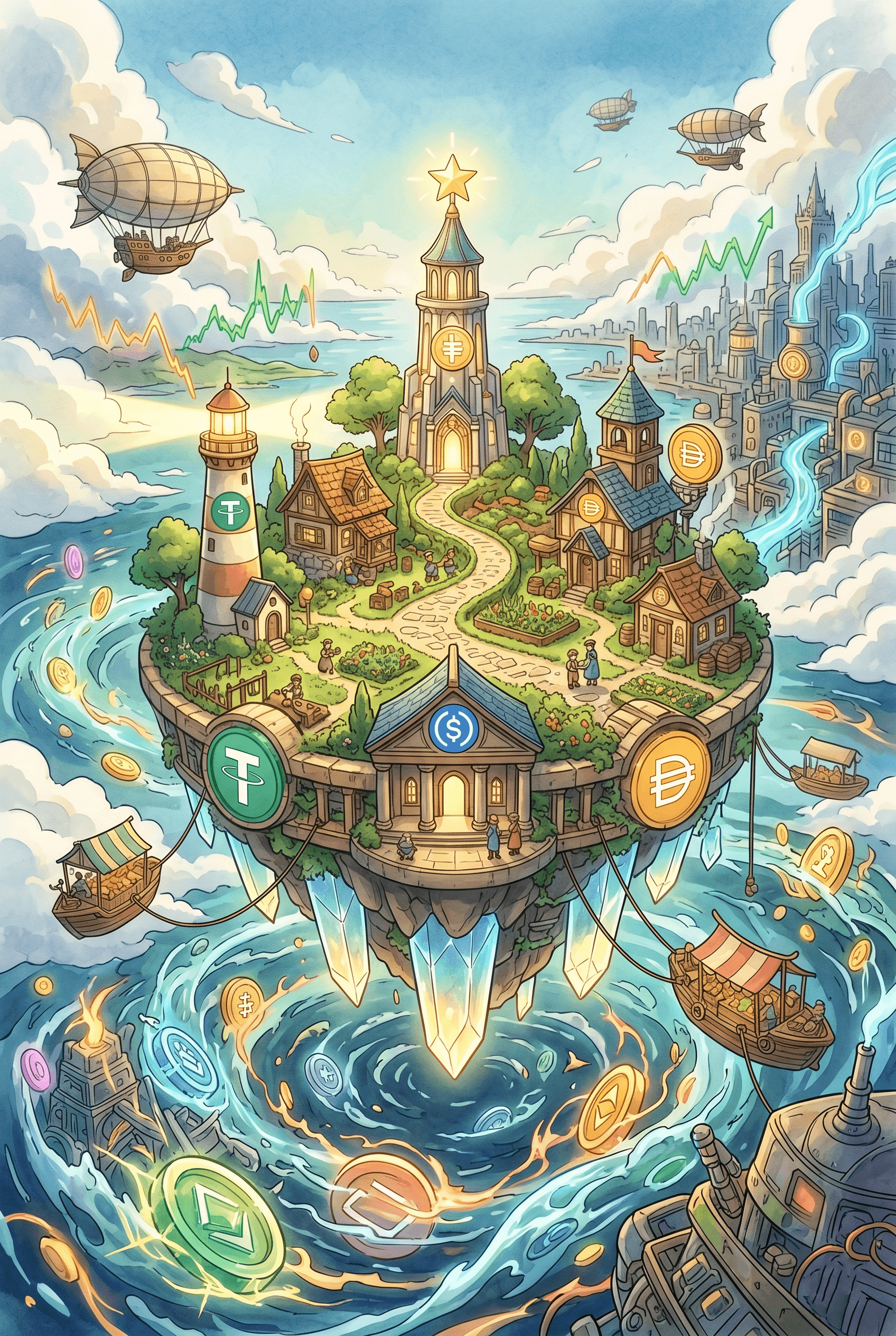
Why Stablecoins Quietly Became the Most Important Product in Crypto
While the crypto industry chased hype cycles and meme speculation, stablecoins quietly evolved into one of the most important pieces of global digital financial infrastructure.
Read moreFrom the feed
Latest Articles
WEB3
The Quiet Genesis: Why XEO is Refusing the Hype Cycle to Build a Sovereign Living Ecosystem
Aug 23, 2026· 2 min

CULTURE
The Bio-Digital Commons: Why Synthetic Biology Requires Decentralized Infrastructure
Jul 24, 2026· 6 min

CULTURE
The Shift Toward Abandoned Mining Shafts for Sovereign Data Center Architecture
Jun 30, 2026· 6 min

CULTURE
Premium Minimalist Hardware and the High-Stakes Economy of Digital Detargeting
Jun 24, 2026· 13 min

CULTURE
Licensing the Mind: The Economics of Generative Agents as High-Yield Digital Assets
Jun 23, 2026· 10 min

WEB3
The Sovereignty Deficit: Why Stablecoin Regulations in Emerging Markets are Forcing Capital Offshore
Jun 18, 2026· 4 min

WEB3
The Missing Piece in GameFi And How XEO Plans to Redefine Ownership, Utility, and Competitive Play
May 27, 2026· 3 min

CULTURE
Cognitive Sanctuary: E-Ink Monitors and the Aristocracy of Attention in the Age of Information Overload
May 22, 2026· 5 min

WEB3
Monero’s War on ASICs and the Structural Economics of Absolute Privacy
May 20, 2026· 10 min

WEB3
Top 10 Proof-of-Work Networks: Efficiency, Hardware Ecosystems, and Market Realities
May 18, 2026· 9 min
Briefs
Latest News
WEB3
XEO Ecosystem Releases Official Track "3.5 Billion Years" Produced by QuixTilt Records
Oct 1, 2026· 1 min

GLOBAL
Inside HSBC and the Bank of England’s Digital Securities Sandbox
Jul 25, 2026· 6 min

GLOBAL
Why S&P 500 Software is Lagging While AI Hardware Dominates 2026
Jul 25, 2026· 7 min

GLOBAL
Why Wall Street is Re-Valuing SpaceX as an AI Infrastructure Giant
Jul 25, 2026· 8 min
WEB3
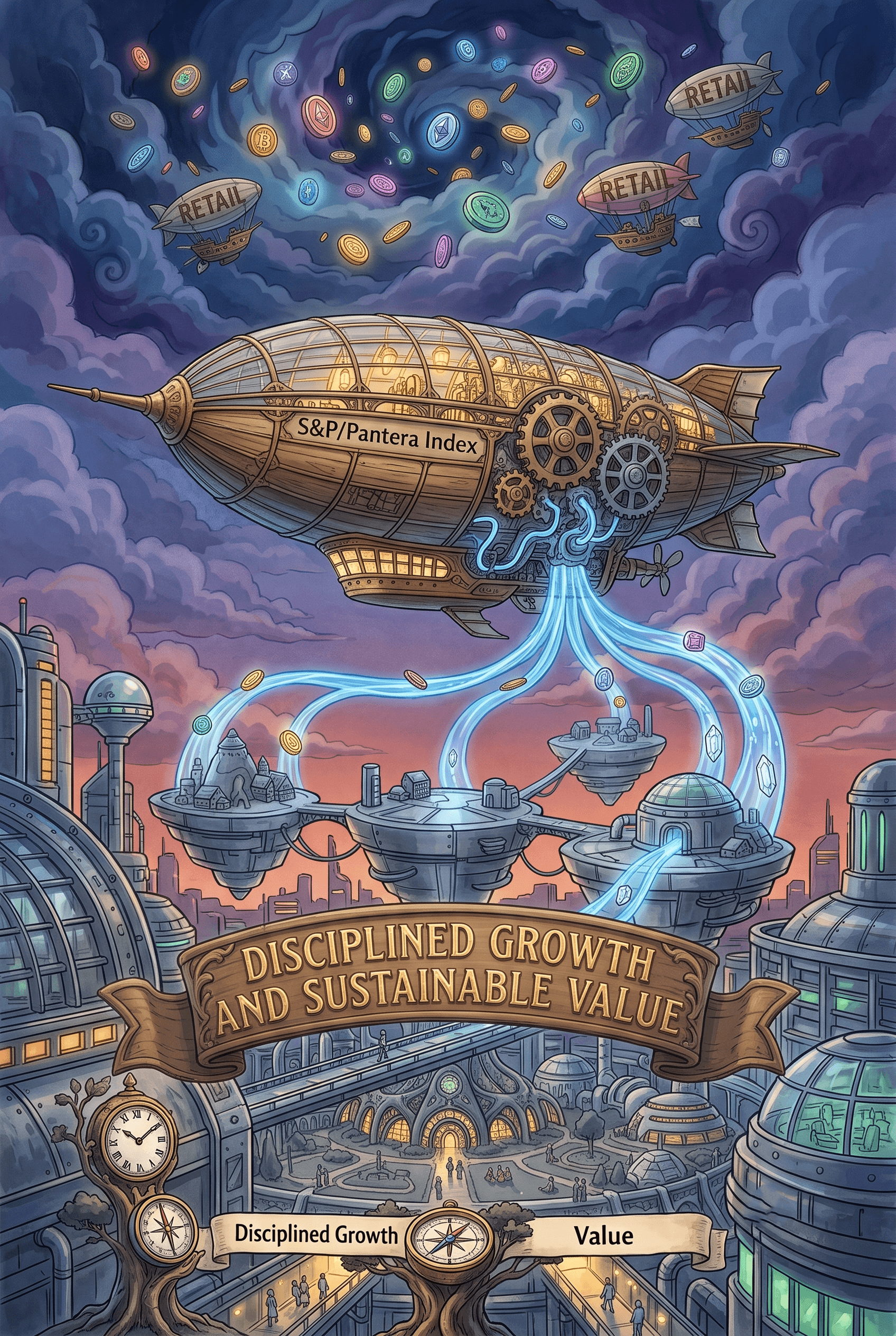
S&P and Pantera’s Index Launch and the End of Speculative Token Valuation
Jul 22, 2026· 7 min

GLOBAL
The Algorithmic Border: How Kinetic Supply Chains are Reindexing South China Sea Logistics
Jul 10, 2026· 3 min

WEB3
A Vision Coming to Life: XEO Takes Strategic Steps to Shape the "Living Ecosystem" of the Future
Jul 8, 2026· 2 min

GLOBAL
The Screen Is No Longer Enough: Inside Silicon Valley’s Physical AI Pivot
May 19, 2026· 4 min

GLOBAL
Silicon Valley’s New Cold War: California vs. The White House Over AI Rules
May 19, 2026· 4 min
GLOBAL
Top 5 AI Processor Stocks to Watch in 2026
May 19, 2026· 4 min